Garden
How We Water Our Garden Without Standing Outside With a Hose
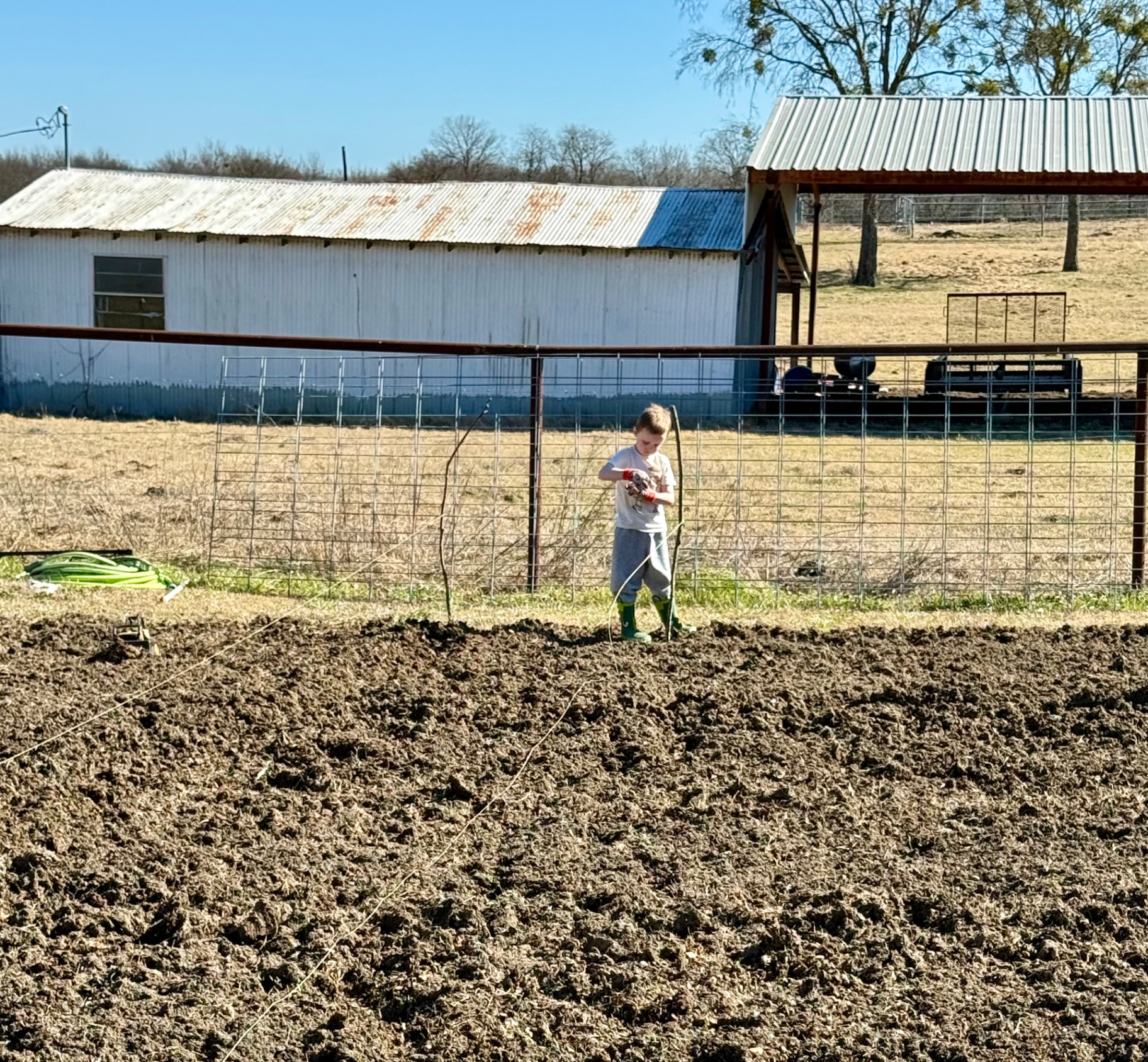
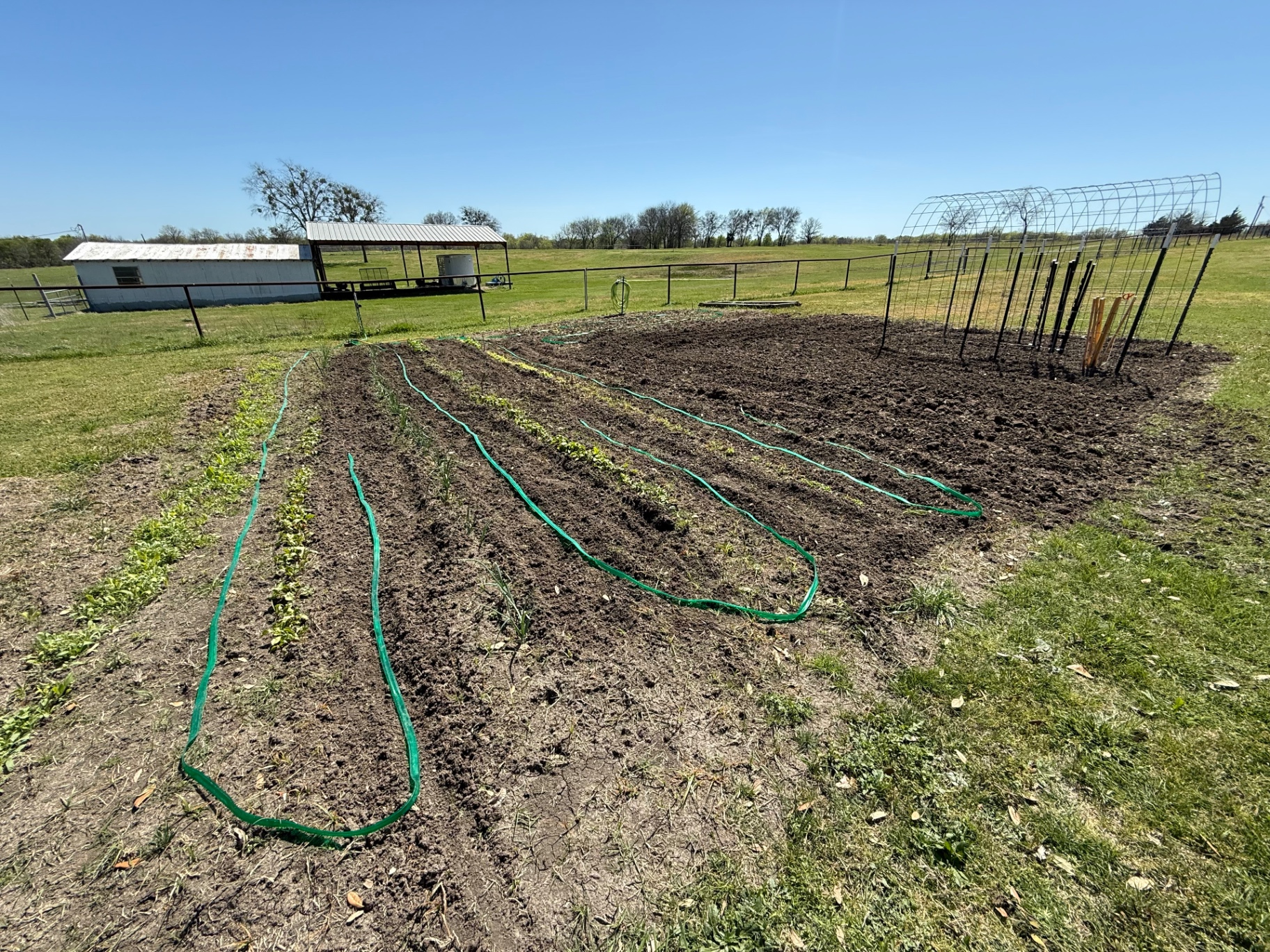
Our main garden is roughly 30 by 30 feet, planted in rows, with a separate raised bed for strawberries. Watering everything by hand would take more time than we want to spend every morning, especially during the hottest part of a North Texas summer. What finally made watering easier was a simple setup: one outdoor spigot, a four-way splitter, soaker hoses laid down the rows, and a timer that turns the water on early in the morning. It isn't a fancy irrigation system. It just works.
One Spigot, More Than One Thing to Water
The biggest problem was that everything needed to run from one outdoor spigot.
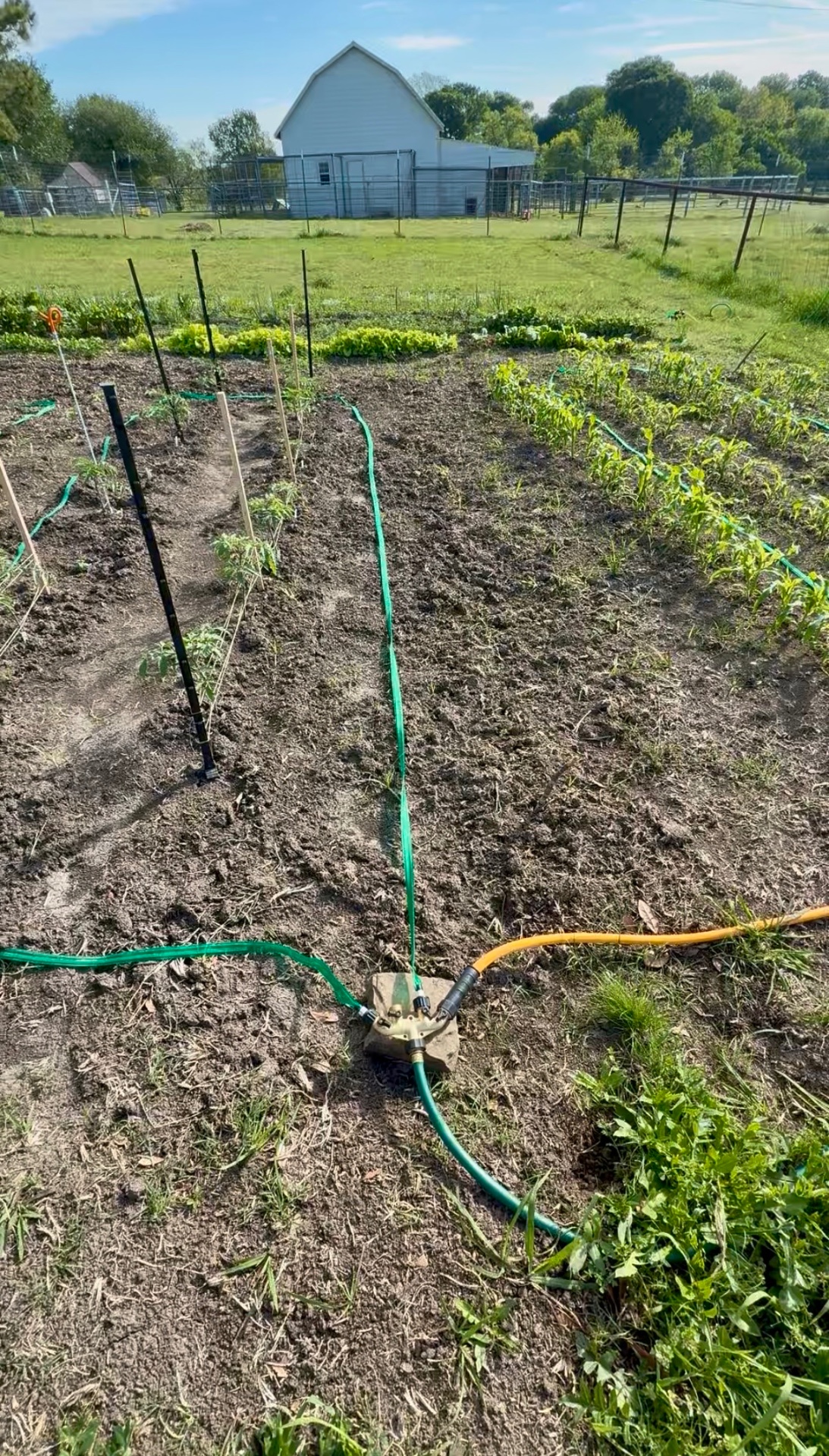
We need water going to the main garden, the strawberry bed, and sometimes a regular hose for anything that needs extra attention. Instead of disconnecting and reconnecting hoses constantly, we use a brass four-way splitter.
That lets us leave several lines connected at once and turn each one on or off as needed.
Soaker Hoses Down the Rows
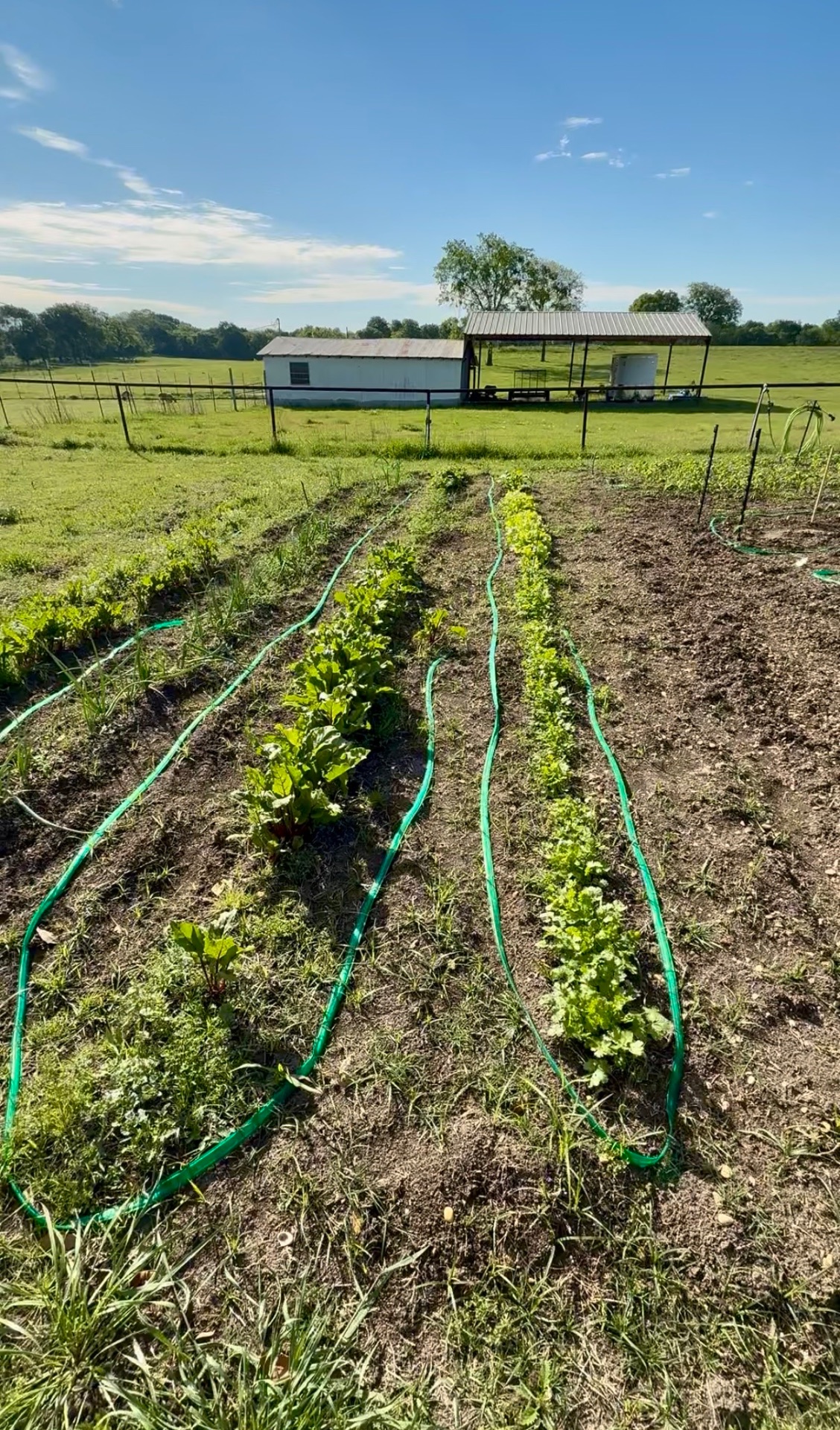
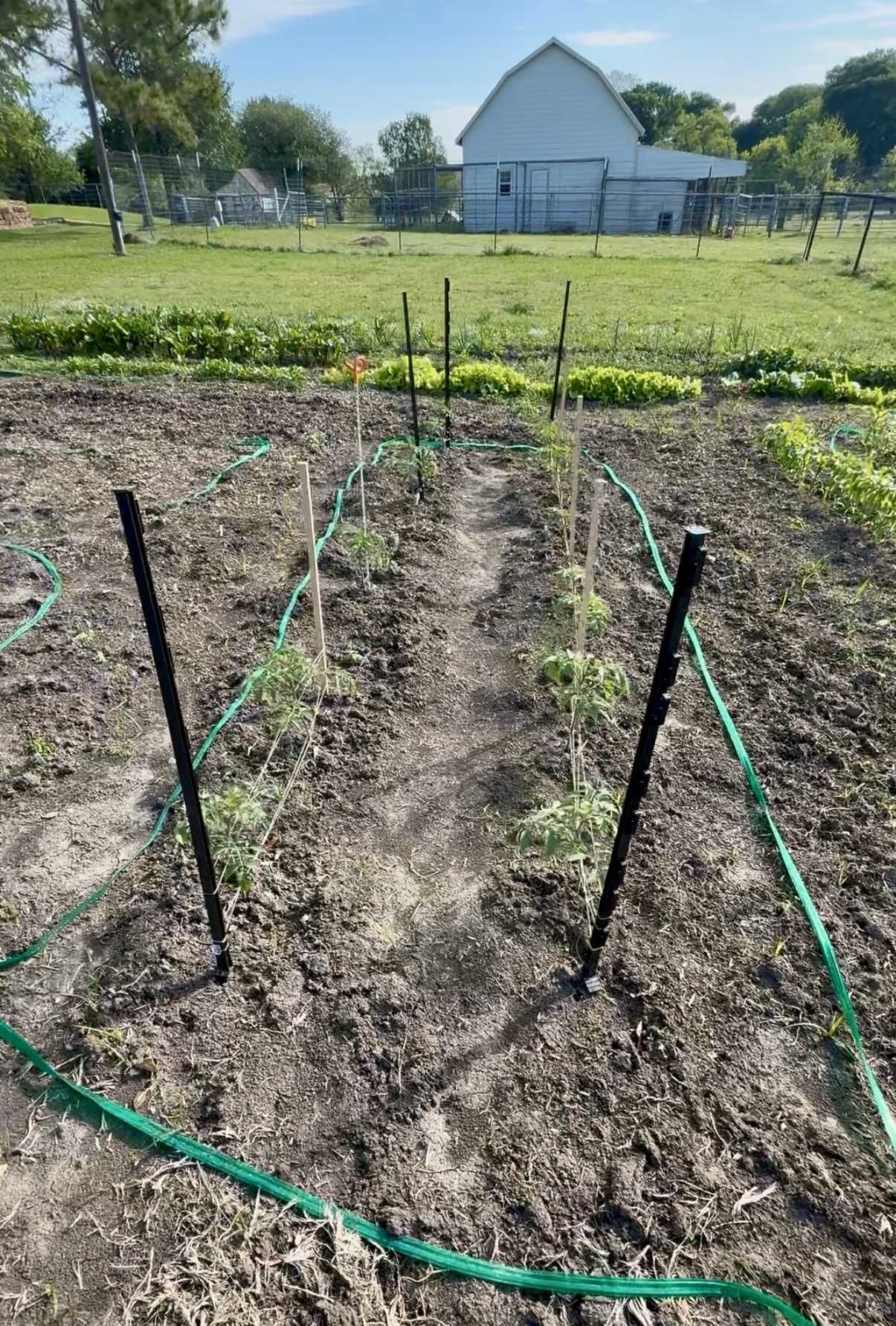
For the main garden, we run soaker hoses along the planted rows.
I like them because the water goes directly into the soil instead of spraying all over the leaves. Once the hoses are laid where we want them, there isn't much to do besides make sure they are still sitting close enough to the plants as everything grows.
Our rows change a little from year to year, so this setup is flexible enough that we can move the hoses around when the garden layout changes.
If you want to see how the rows themselves come together, I wrote about how we lay out and plant our garden rows.
The Timer Is What Makes the Whole Setup Work
The timer is probably the part that saves us the most effort.
During the hottest part of the season, the garden needs water early enough that the plants can use it before the heat really sets in. The timer handles that without anyone having to walk outside first thing in the morning and turn the spigot on.
We can set it, adjust it when the weather changes, and shut it off when we get enough rain.
That does not mean I never check the garden. I still look at the soil and the plants because a timer cannot tell you whether something is actually thirsty. It just means watering does not depend on somebody remembering to turn the hose on every morning.
We Still Adjust for the Weather
I do not think any watering schedule should be completely automatic.
North Texas weather can go from wet to brutally hot pretty quickly. During stretches of extreme heat, we may need to water more often. After a good rain, we can shut the timer off and let the ground dry out some.
I would rather pay attention to the soil than follow a rigid schedule.
If the soil is still damp a few inches down, the plants probably do not need more water just because the timer says it is watering day.
The Strawberry Bed Is Separate
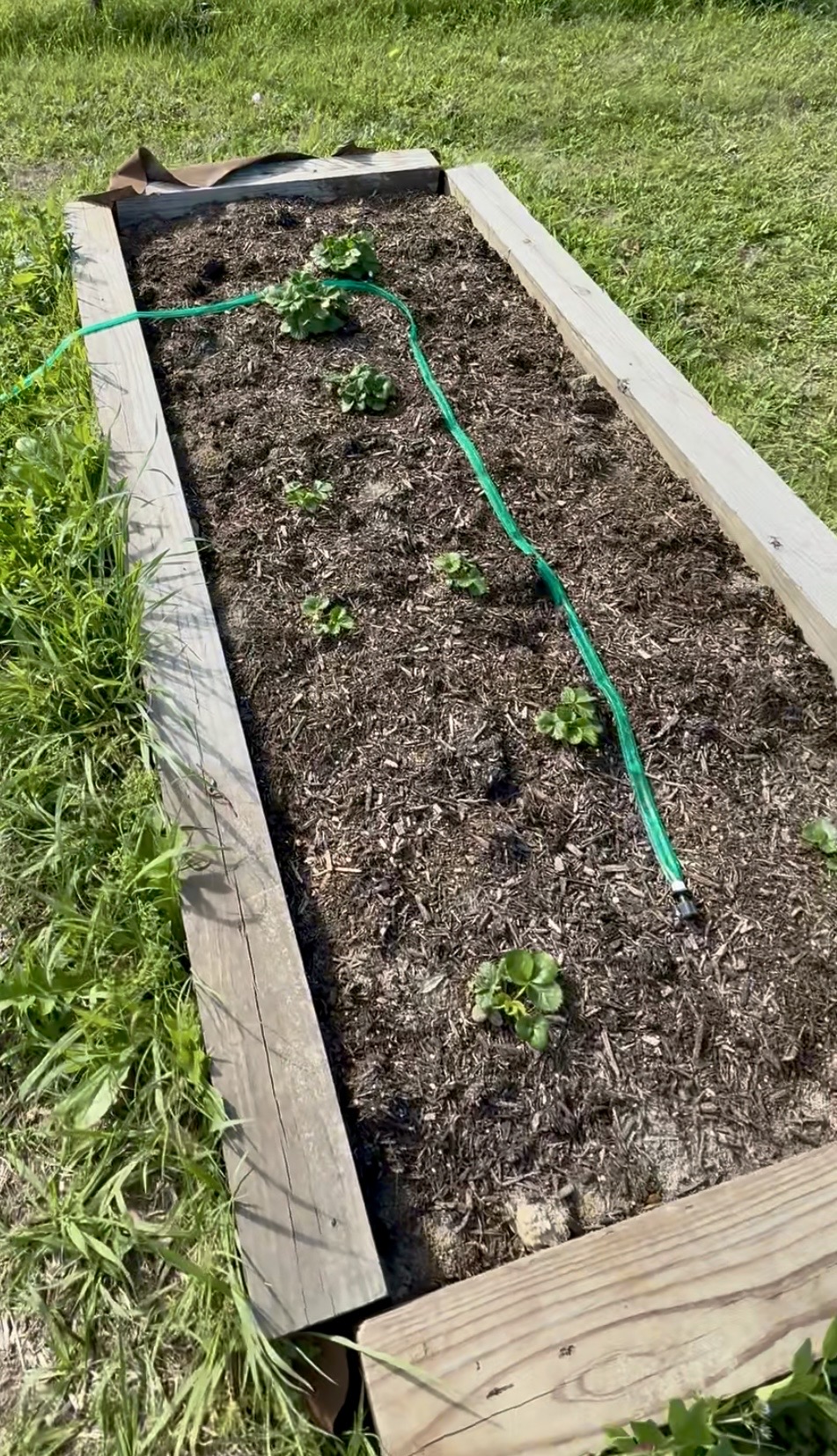
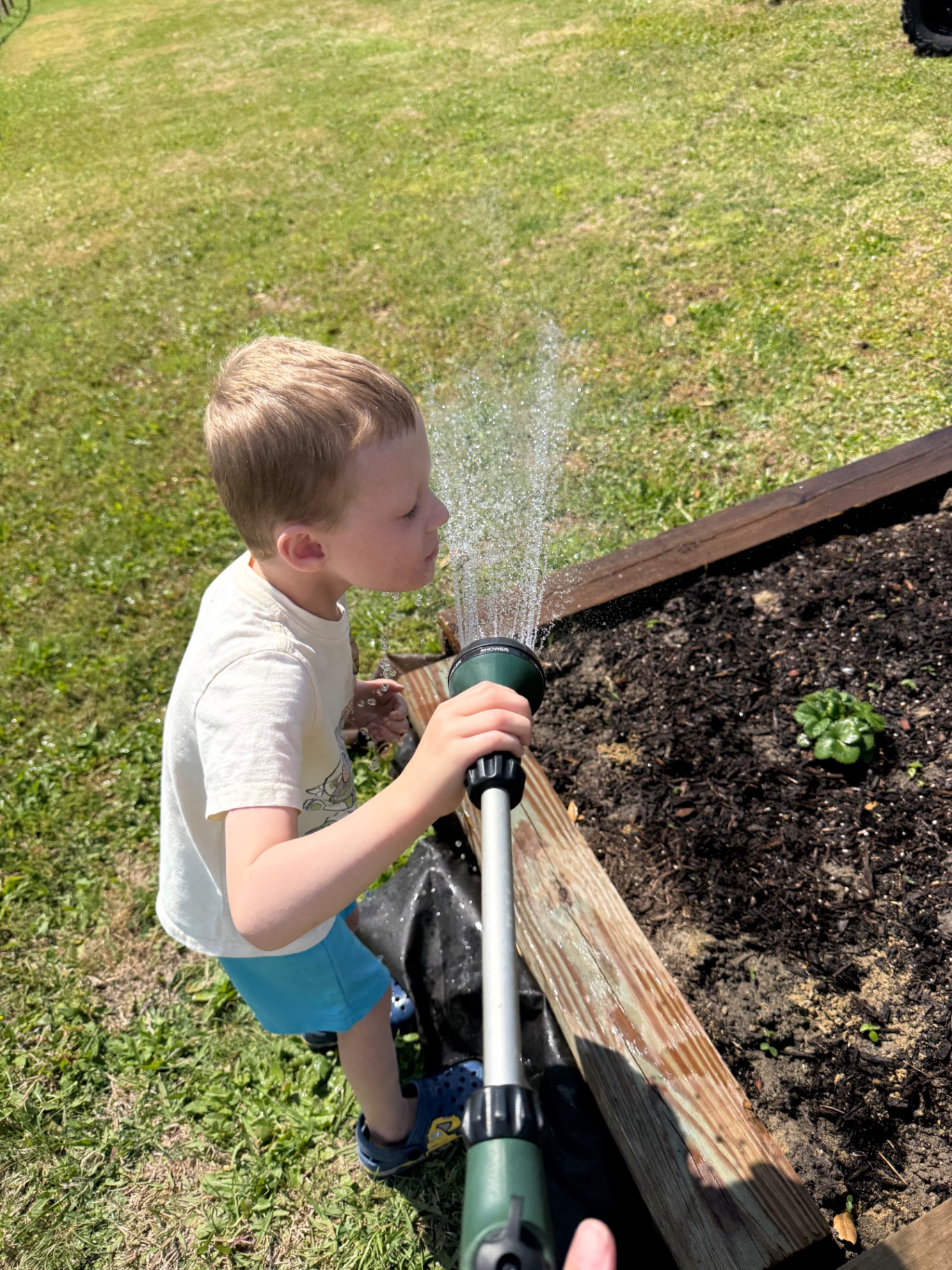
Most of our vegetables grow directly in the ground, but our strawberries have their own raised bed.
We run a separate watering line to that bed so it can be managed independently from the main garden. That matters because the strawberry bed does not always need exactly the same amount of water as everything growing in the rows.
It is another reason the splitter works so well for us. We can control different parts of the garden without rebuilding the whole watering setup.
More about that bed and how we planted it is in our one raised bed is for strawberries.
Once the Garden Grows In
Early in the season the hoses are easy to see running through mostly bare dirt. Later on, the plants fill in around them and the watering lines all but disappear into the rows.
That is when the setup earns its keep. The water is already going right to the base of the plants, and nothing has to be dragged back out and re-aimed.
The sweet corn is a good example — you can see how that section grew in over the season in growing sweet corn in our in-ground garden.
Practical favorites
What We Use
Our setup is simple:
- Brass four-way hose splitter
- KOYMISKU water timer
- 50-foot soaker hoses
- A regular garden hose for anything that needs extra water
What We've Learned
The biggest thing I have learned is that the best garden system is usually the one you will actually keep using.
Our watering setup is not permanent underground irrigation and it is not especially pretty. There are hoses running through the garden all summer, and sometimes they need to be moved or adjusted.
But it gets water where we need it, it saves us time, and it keeps us from standing outside holding a hose every morning.
For our garden, that is enough.
If you want the rest of the tools we actually reach for, they're all on our favorites page.