Garden Planning
How We Lay Out and Plant Our Garden Rows
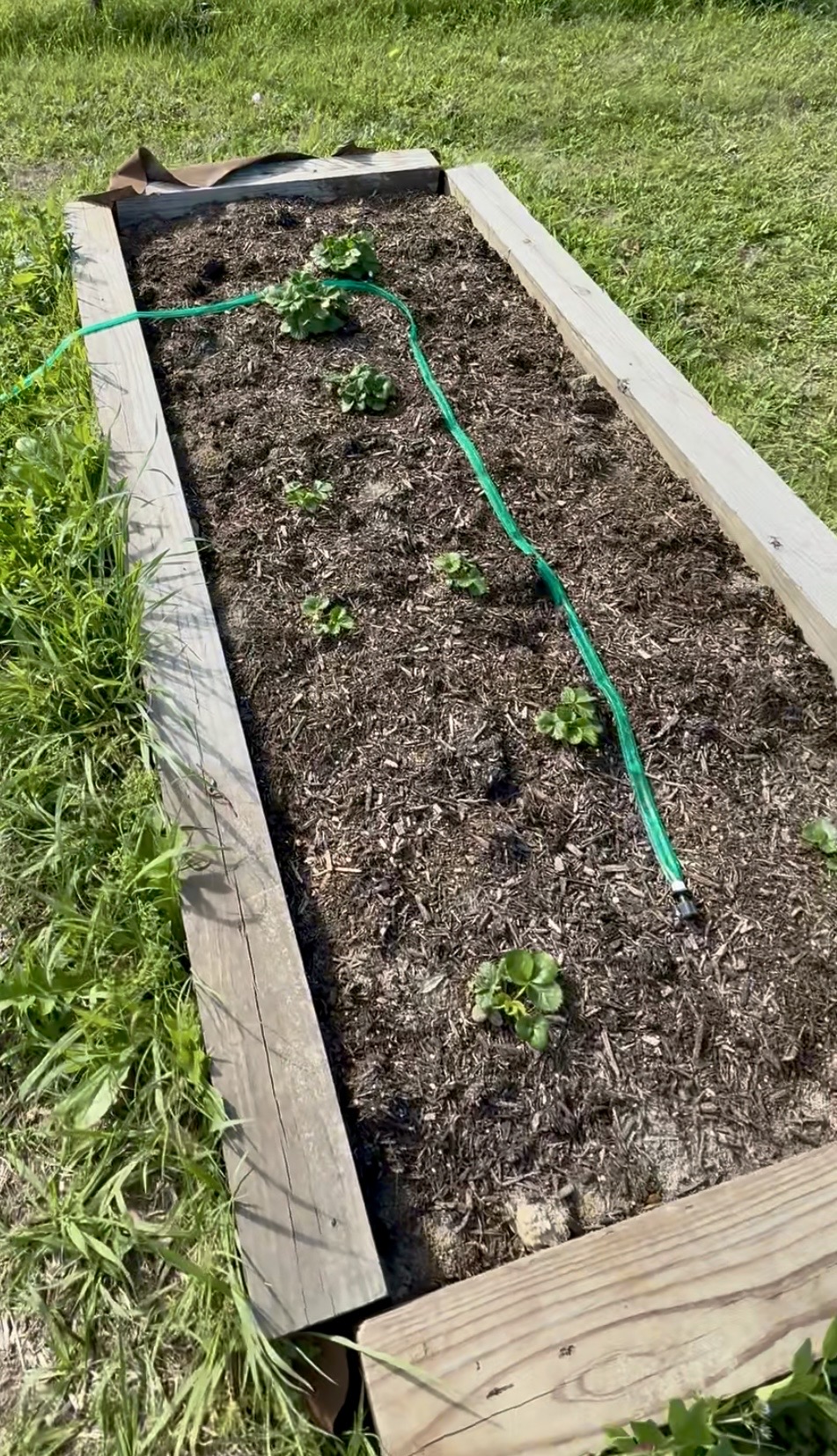
Most of our vegetables grow in one large in-ground garden, with a separate raised bed for strawberries. Before planting starts, we make a rough plan for what we want to grow, where it needs to go, and when it needs to be planted. Our layout isn't complicated. We leave enough room to work between the rows, use stakes and string to keep them straight, and set up watering so we aren't dragging hoses through the garden all summer.
Planning before planting
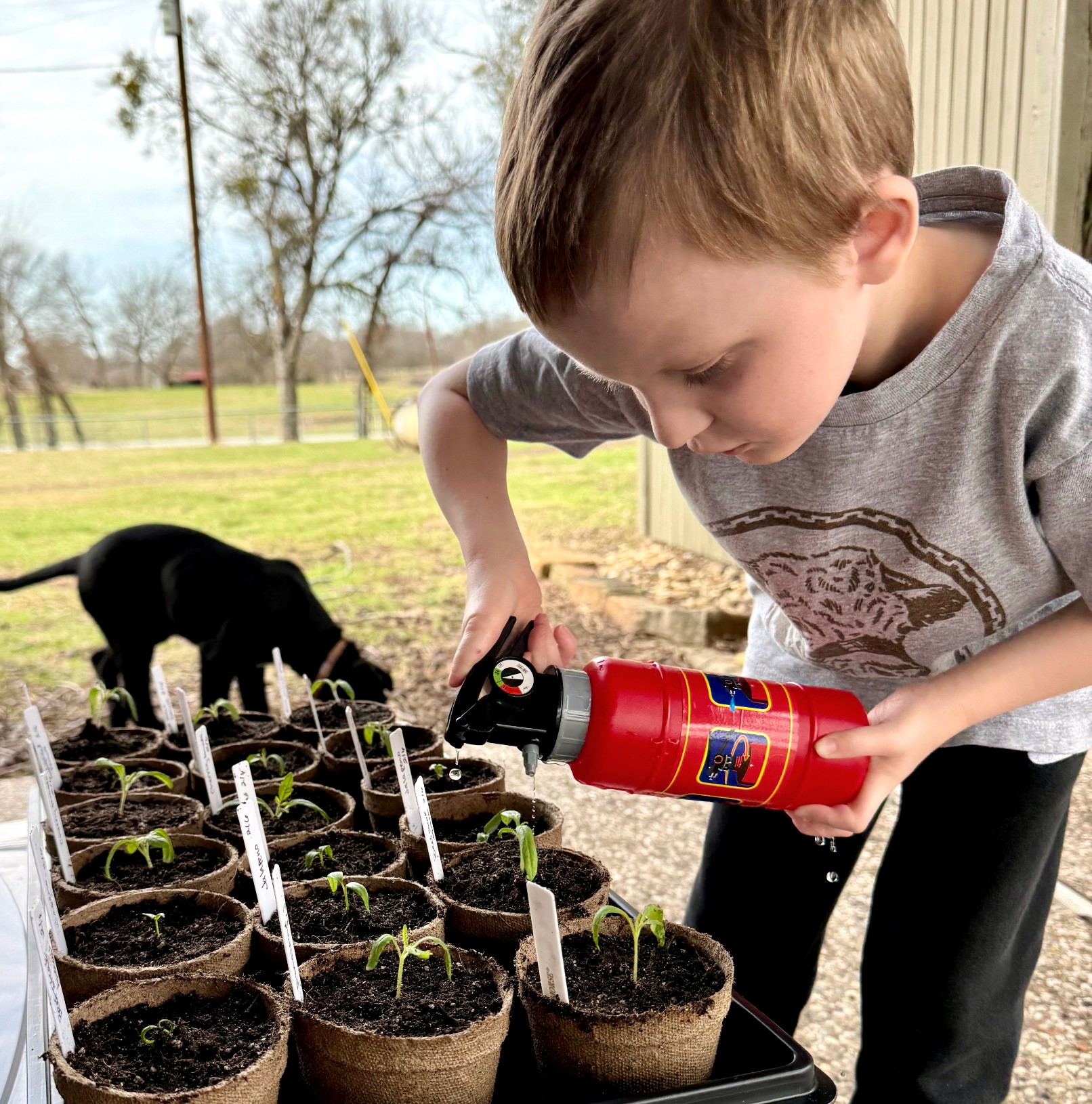
Every year starts with a rough plan. We write down what we want to grow, what needs to be started indoors, what can be planted directly in the garden, and roughly when each crop needs to go in.
We also think about how much room each plant will eventually need. Tiny seedlings make empty garden space tempting to fill, but by summer those little plants can take up far more room than expected. Leaving enough space from the beginning makes the garden much easier to water, weed, harvest, and move through.
Tilling with the tractor
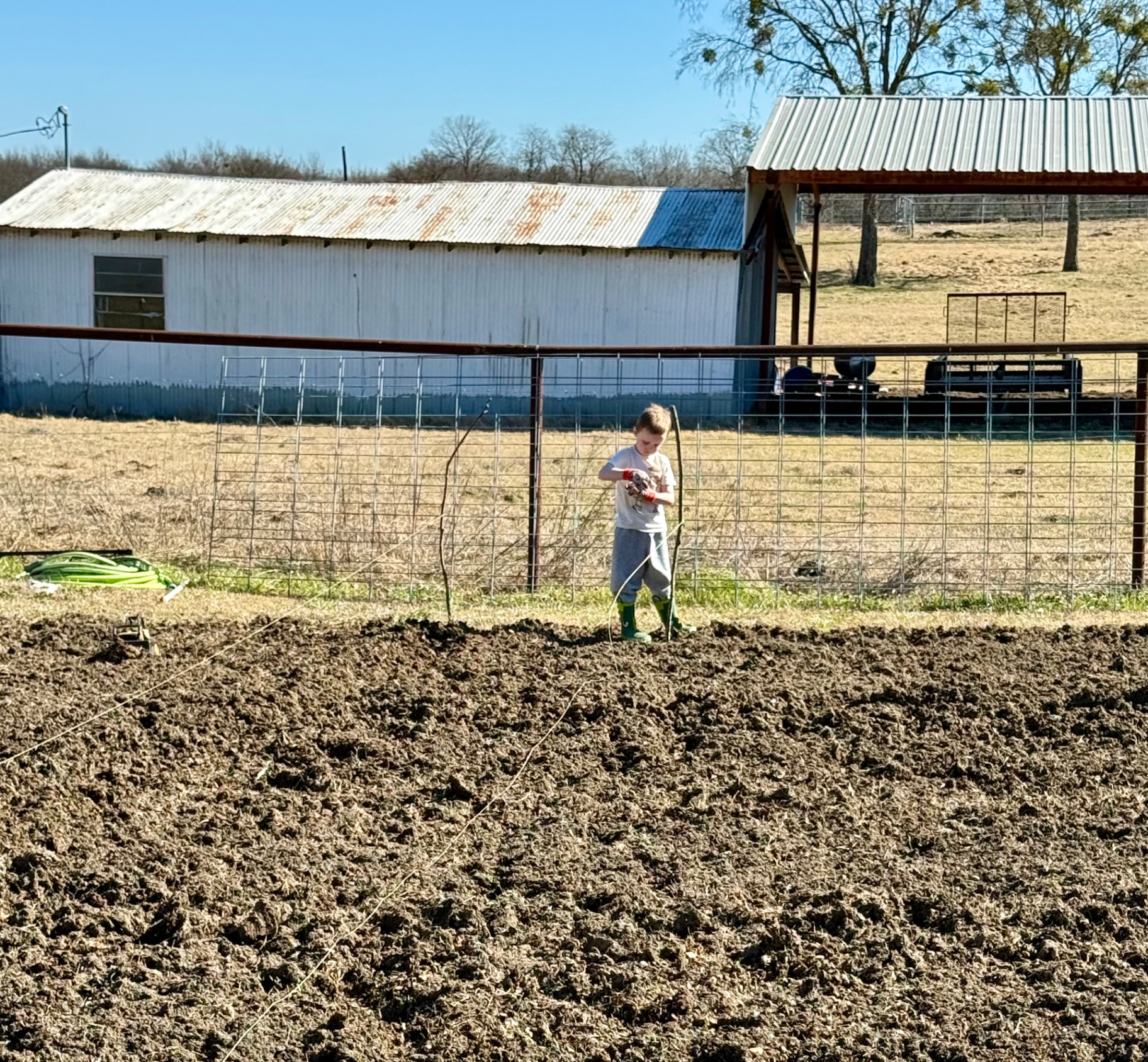
Our garden is large enough that we use the tractor for the first tilling of the season. It breaks up the soil and gives us a clean starting point before we begin laying out the rows.
Once plants are established, the tractor stays out and we use a smaller tiller between the rows when we need it for weed control.
Stakes and string for straight rows
To lay out each row, we put a stake at both ends and pull a string tightly between them. Then we use the string as our planting guide.
It's a simple step, but it keeps the rows straight and helps us maintain consistent spacing. Straight rows also make it much easier to run the tiller and lay soaker hoses once the garden starts filling in.
Trellising our pole beans
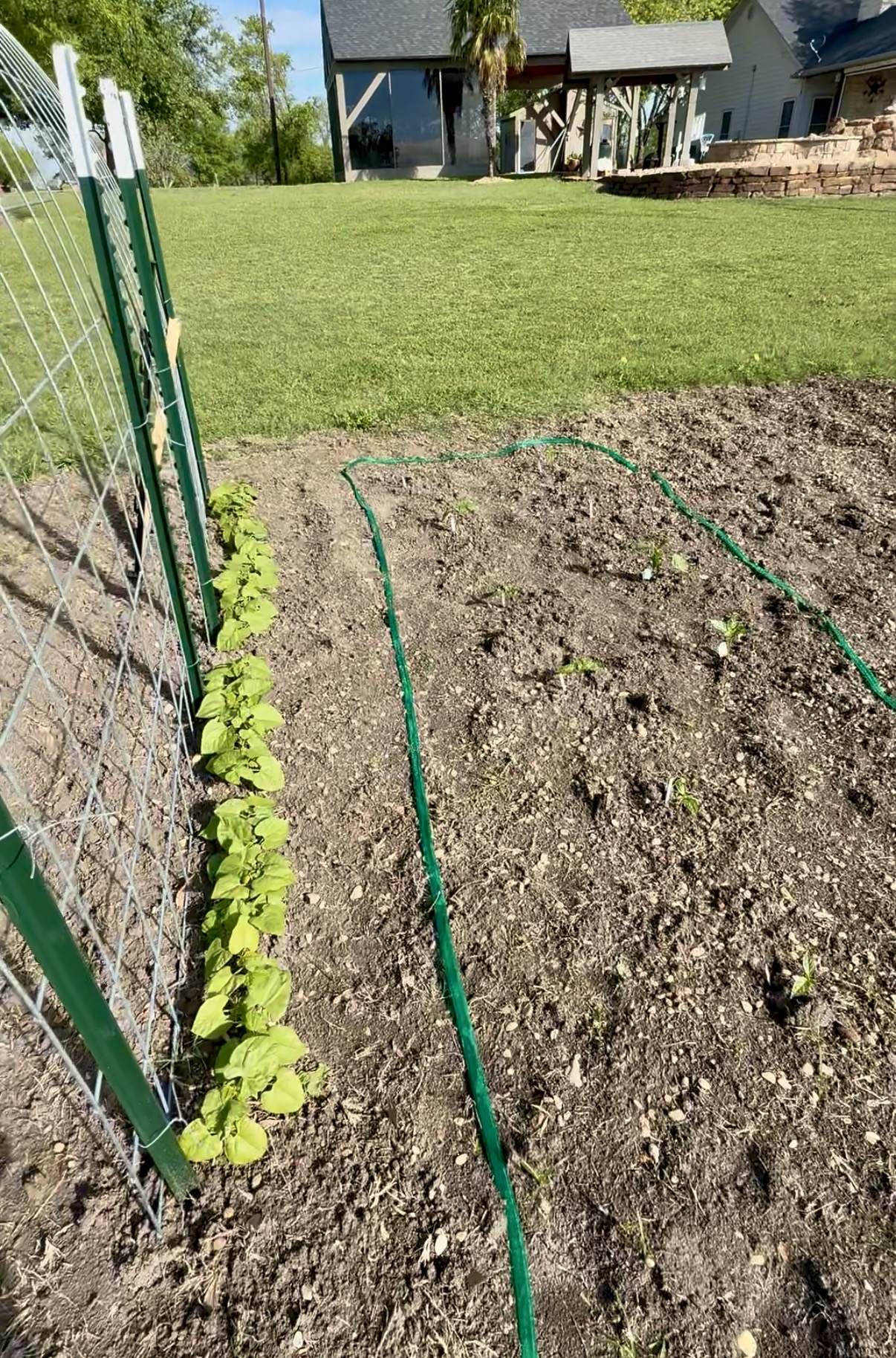
We grow our pole beans vertically on cattle-panel trellises and put the panels up early so the beans have something to grab as soon as they start climbing.
Once they find the trellis, they do most of the work themselves. Growing vertically keeps the vines contained, makes the beans easier to see and pick, and keeps them from sprawling into the surrounding rows.
Soaker hoses and a timer
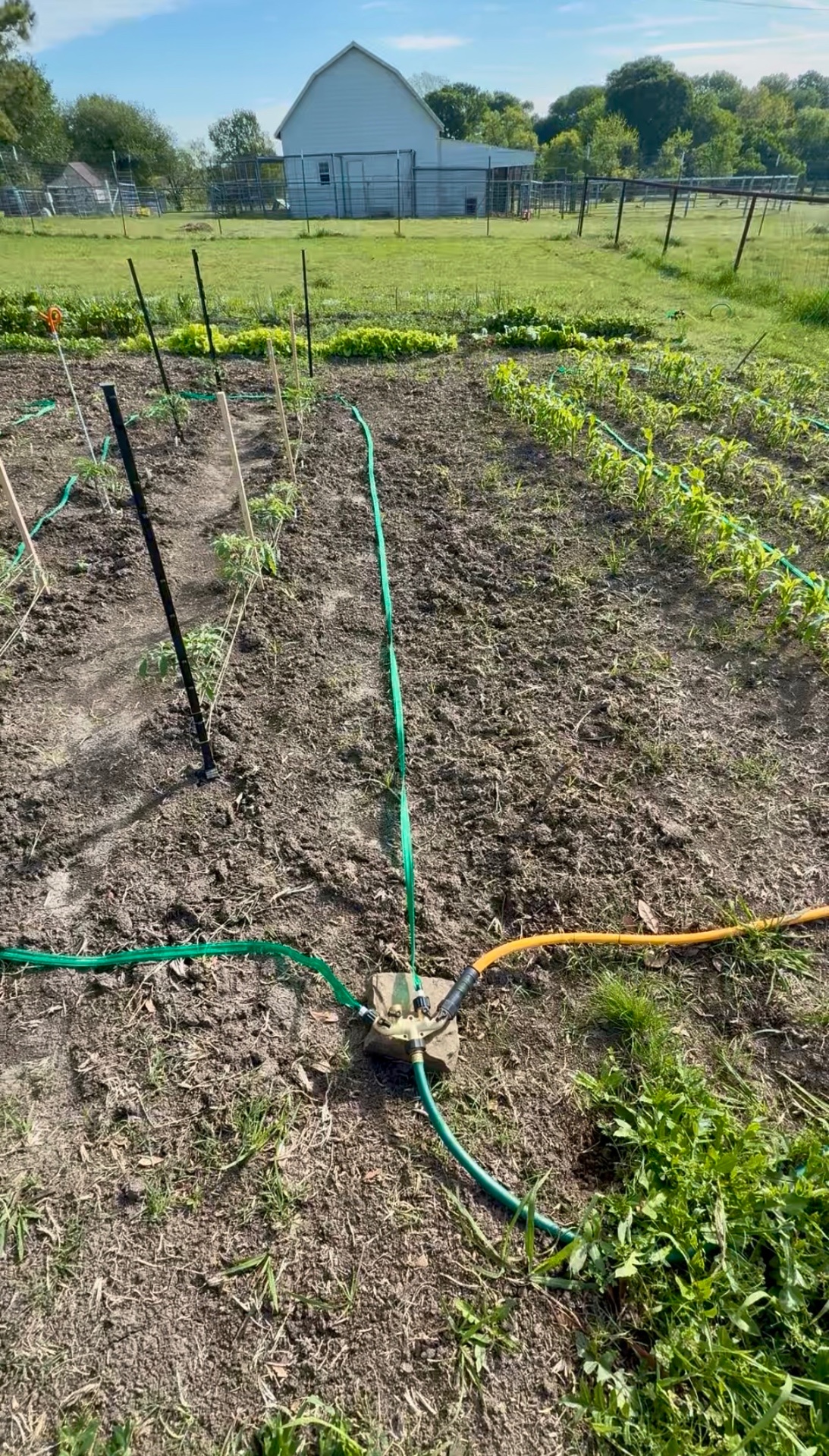
We run soaker hoses along our rows and connect them through a hose splitter and programmable timer. Once everything is set up, we can water slowly at soil level without moving sprinklers or dragging hoses around the garden.
The timer has been one of the most useful additions to our garden setup, especially once summer heat arrives and consistent watering matters most.
We also try to put trellises, stakes, and other supports in place early, before the plants are large enough to make the job harder.
Fertilizing once things are growing
Once the plants are established, we fertilize as needed rather than on a strict schedule. We use a fish-based liquid fertilizer, and we go by how the plants look — some seasons that means every week or so, and some seasons it means far less.
This is simply what has worked in our garden, and we adjust something every single season.