Cleaning & Home Tips
9 Ways I Use White Vinegar Around the House
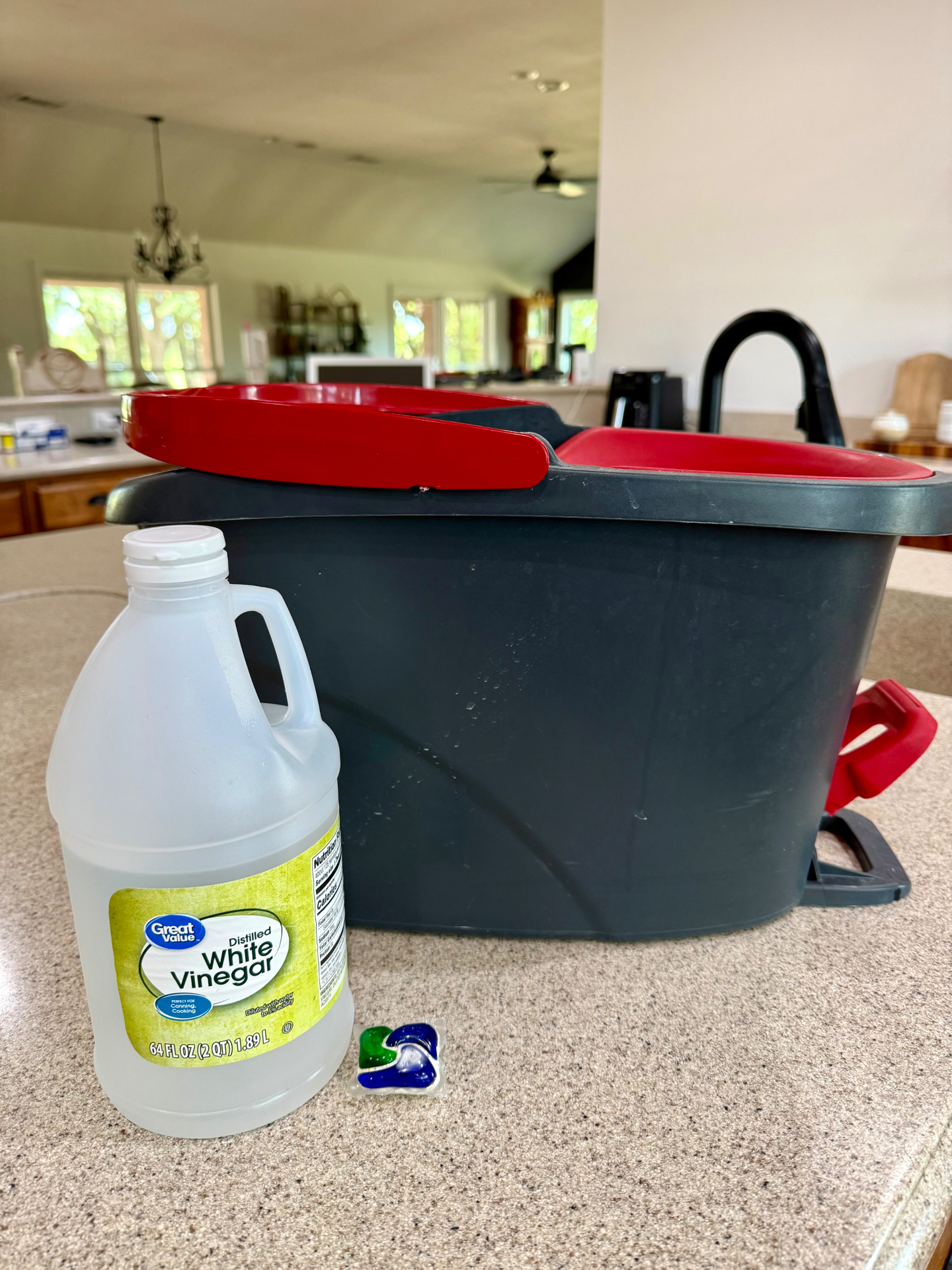
I almost always have a gallon of plain distilled white vinegar around because I use it in several different parts of the house. I do not use it for everything, and I am not trying to replace every cleaner we own. These are simply the ways white vinegar has worked its way into my normal laundry, kitchen, cleaning, canning, and produce routines. Because vinegar is acidic, I still check care instructions before using it on appliances, flooring, fixtures, or specialty surfaces.
1. In the Fabric Softener Dispenser
One of the easiest ways I use white vinegar is in the laundry.
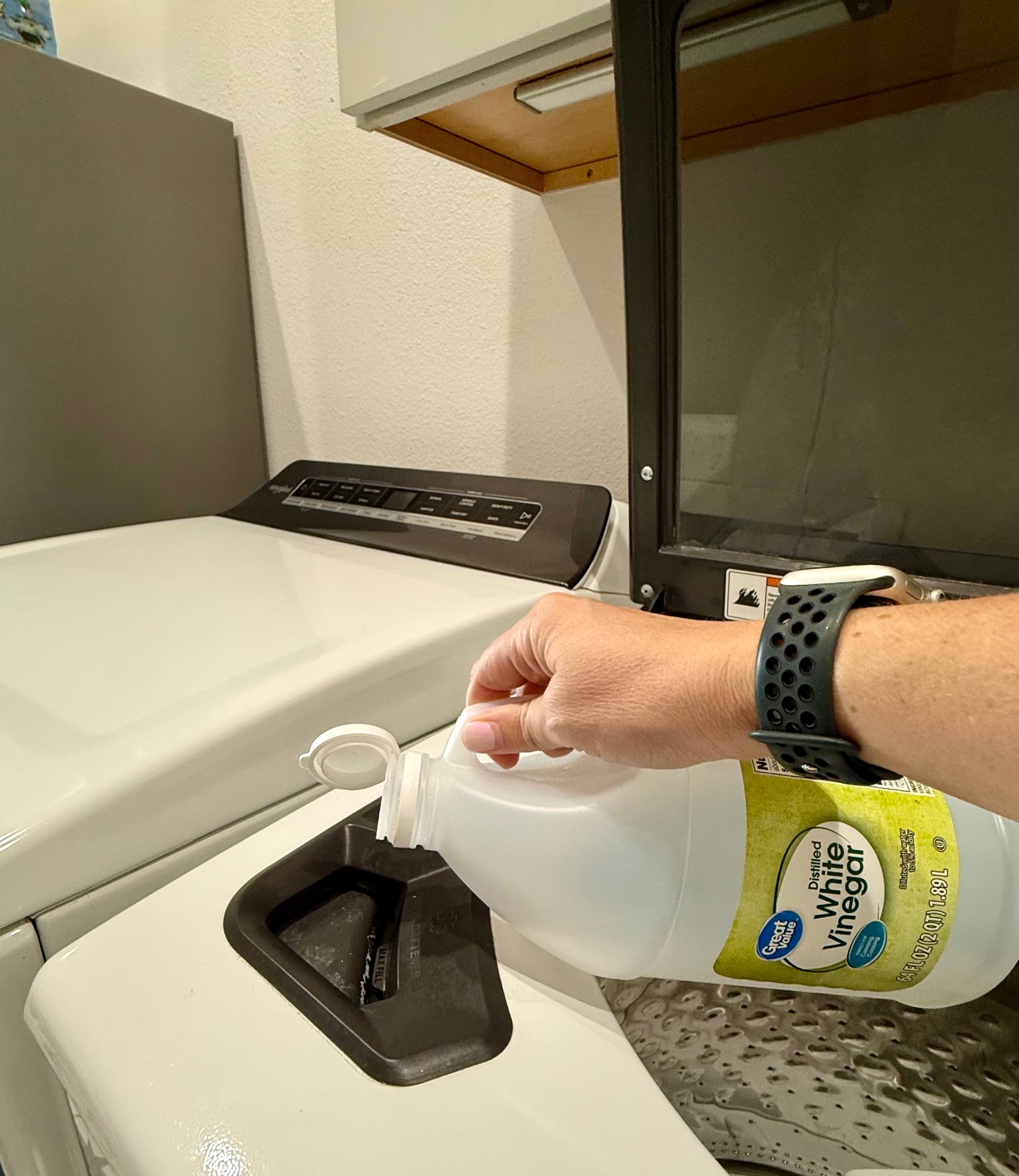
I pour plain distilled white vinegar into the washing machine's fabric-softener dispenser up to the machine's fill line.
I do not measure it separately because the dispenser already tells me how much to use.
This is what works for our laundry routine, but washing machines vary, so check your manufacturer's instructions before using vinegar regularly.
2. Descaling the Coffee Maker
I have also used white vinegar to descale a coffee maker.
When I have done it, I used roughly half water and half distilled white vinegar, ran it through a cleaning cycle, then followed with a couple of plain-water rinse cycles.
This is something I have done occasionally rather than part of a regular routine. Some coffee makers recommend specific descaling products or methods, so always check the manufacturer's instructions first.
3. In the Dishwasher Rinse-Aid Compartment
I also use white vinegar in the dishwasher.
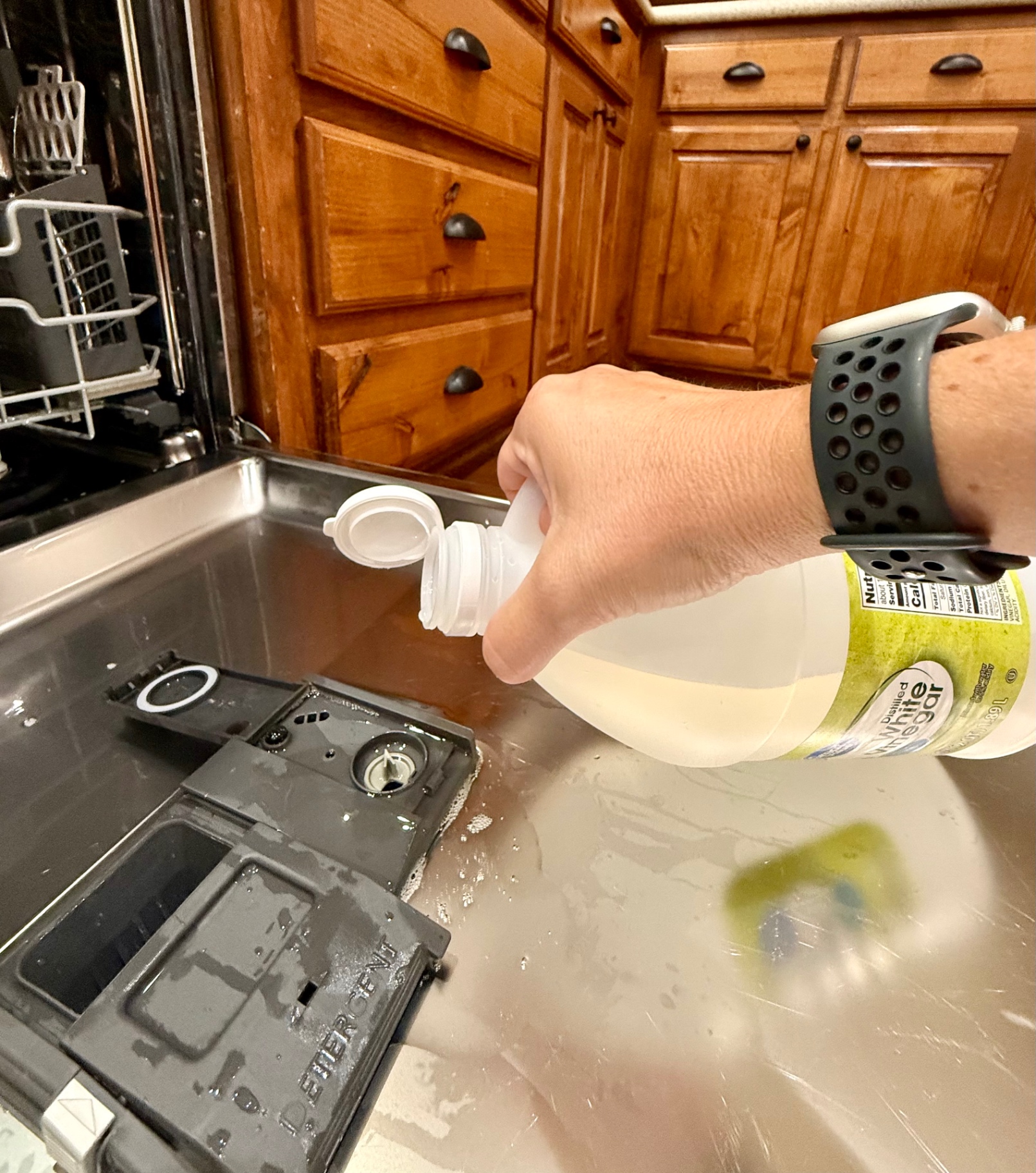
I pour it into the rinse-aid compartment up to the fill line.
Again, I do not measure a separate amount because I use the dishwasher's built-in fill line.
This is simply what I do in our machine. Dishwasher manufacturers vary, so check your manual before using vinegar in the rinse-aid compartment.
4. Soaking a Showerhead
For mineral buildup on a showerhead, I have used the old bag-of-vinegar method.
I fill a bag with distilled white vinegar and secure it around the showerhead so the affected area can soak.
I do not use a set soaking time. It depends on how much buildup there is. My approach is simple: soak it, scrub it, and repeat if needed.
Some decorative finishes can be damaged by acids, so check the fixture's care instructions before soaking it in vinegar.
5. A Small Splash in My Mop Water
When I mop, I sometimes add a small splash of distilled white vinegar to the mop water.
I do not measure it. It is literally just a splash.
This is part of my normal floor-cleaning routine, but vinegar is not appropriate for every flooring material or finish. Follow the care instructions for your own flooring.
Floors stay on a simple routine here — how I keep our floors clean without cleaning them every day.
6. Steam-Cleaning the Microwave
For the microwave, I use a simple mixture:
- 1 cup water
- 1 cup distilled white vinegar
I put the mixture in a microwave-safe bowl and heat it until it is hot enough to create plenty of steam. The steam helps loosen stuck-on messes, and then I wipe the inside of the microwave clean.
Use care when handling the hot bowl and opening the microwave after steaming.
7. Wiping Canning Jar Rims
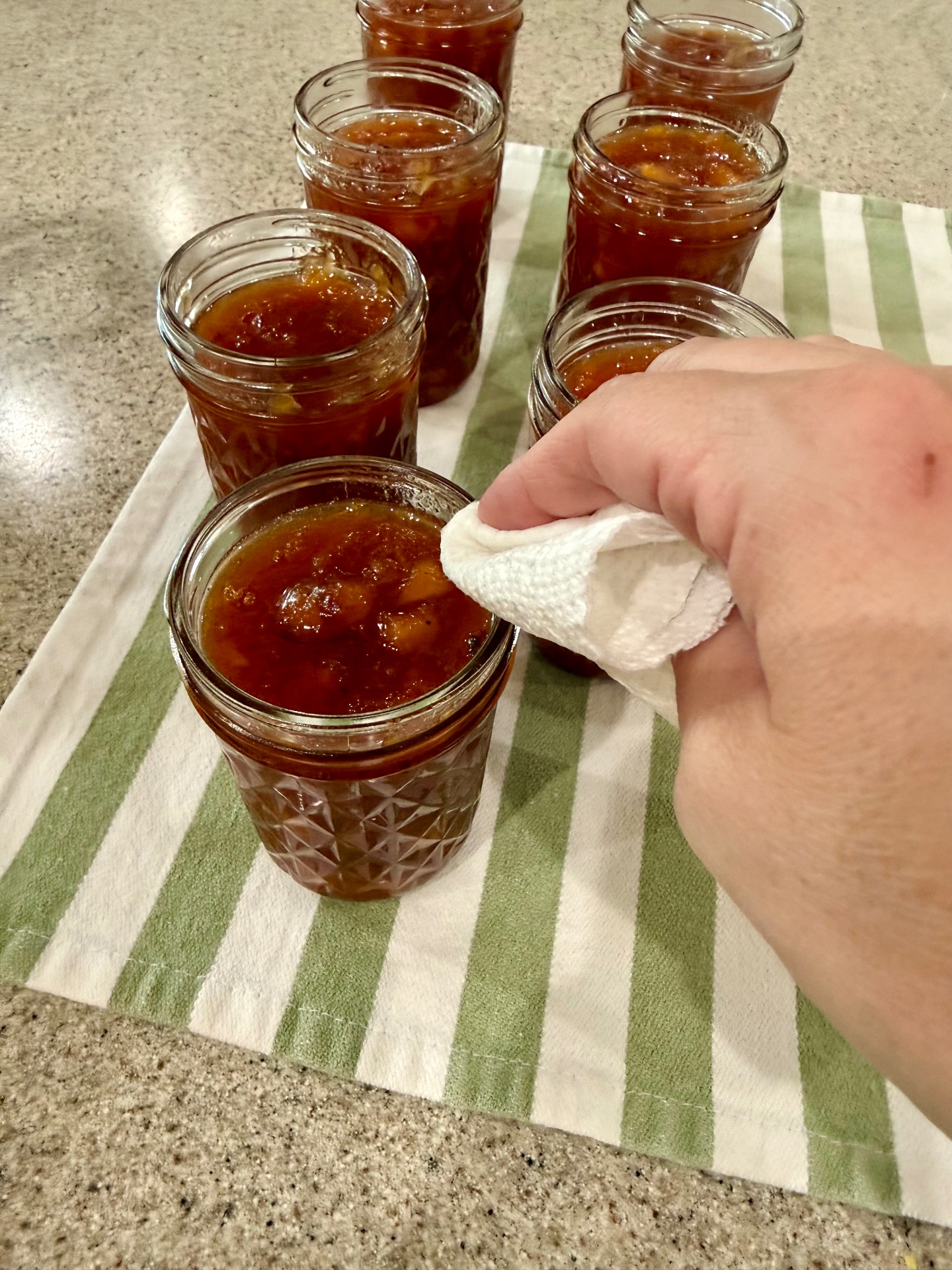
When I am canning, I use straight distilled white vinegar on a clean paper towel to wipe the jar rims before putting the lids on.
I use it simply to help make sure the rim is clean before the lid goes in place. It is not a substitute for proper canning sanitation or tested processing instructions.
This is the step I use on jam and topping days, like our homemade peach topping.
8. Washing Fresh Fruit
I also use white vinegar when I wash fresh fruit.
I put the fruit in a large bowl, add a splash of distilled white vinegar and about 1 tablespoon of baking soda, then fill the bowl with water.
I swish everything around, rinse the fruit thoroughly with clean water, and dry it before storing or serving.
This is simply the way I wash produce at home. I do not treat it as a disinfecting step or make claims that it removes all pesticides or contaminants.
For food safety, fresh produce can also simply be rinsed thoroughly under clean running water; this vinegar-and-baking-soda soak is just the routine I personally use at home.
9. A Little Vinegar in My Canner Water
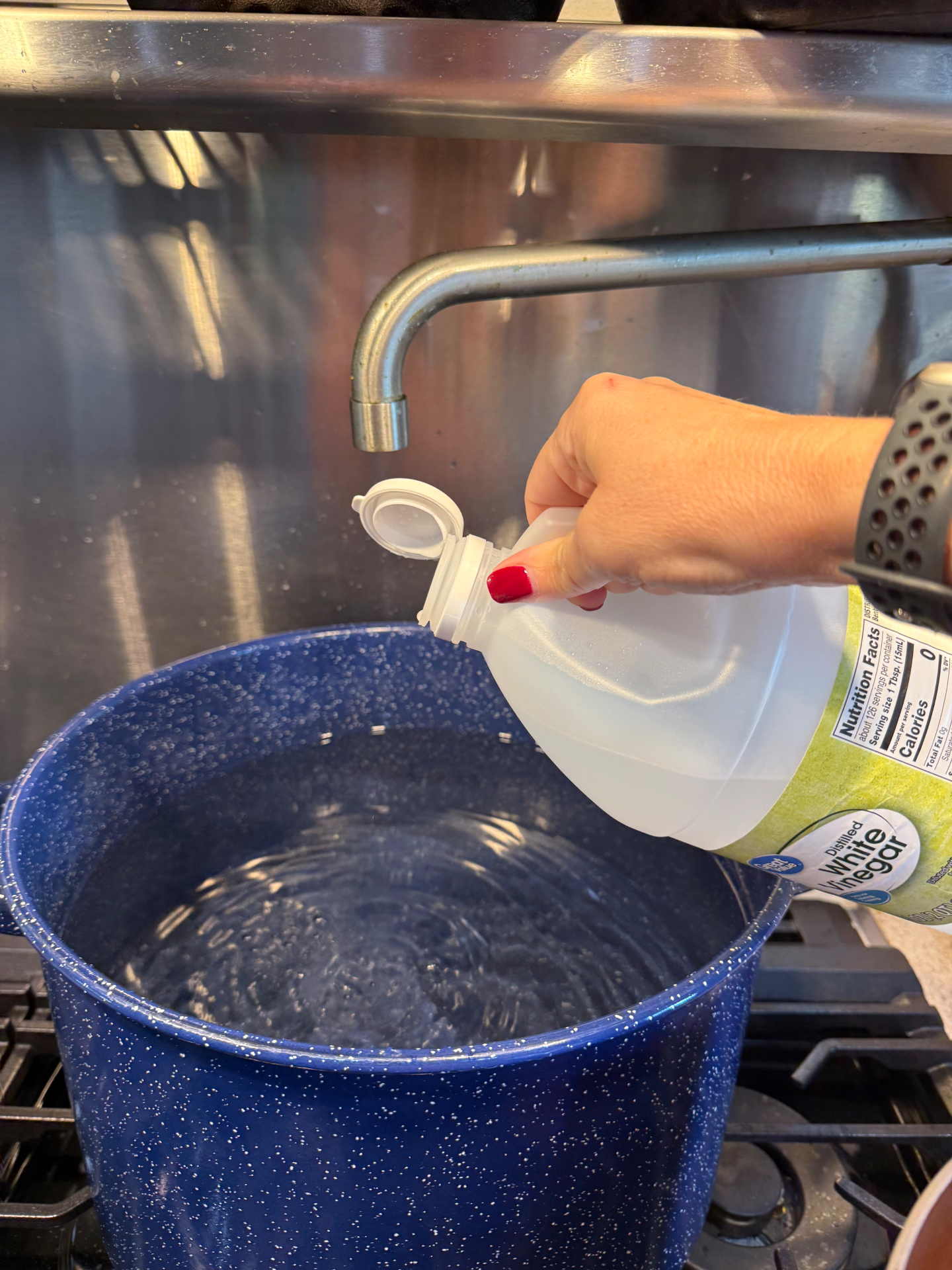
I also add roughly 2 tablespoons of distilled white vinegar to the water in my canner.
I do this to help reduce the cloudy mineral film or water spots that can show up on jars and the inside of the canner.
The vinegar goes into the canner water only. It is not part of the food recipe and does not change processing times or the acidity of the food.
More of what we put up is on our canning and food preservation page.
Where I Don't Use White Vinegar
A few places I either avoid it or check first:
- Never mix vinegar with chlorine bleach — that combination can create dangerous chlorine gas.
- Do not assume vinegar is safe for natural stone such as marble, granite, travertine, or similar acid-sensitive surfaces.
- Do not assume it is safe for every hardwood or specialty floor finish.
- Check appliance-manufacturer instructions before using vinegar inside washing machines, dishwashers, coffee makers, or other appliances.
- When actual disinfection is needed, use an EPA-registered disinfectant instead.
Why I Keep a Gallon Around
These are all pretty simple uses, but they are the reason I almost always have a gallon of white vinegar around. It is inexpensive, I use it in several different parts of the house, and over time it has just become one of those things I reach for without thinking much about it.
I still use regular household cleaners too. Vinegar is just one practical tool in the mix.
Products Used
Nothing complicated here:
- Plain distilled white vinegar
- O-Cedar spin mop and bucket
- Water-bath canner and canning tools
- Clean paper towels
See everything we actually use on our Favorites page.