Longhorns
What We’ve Learned Raising Texas Longhorns
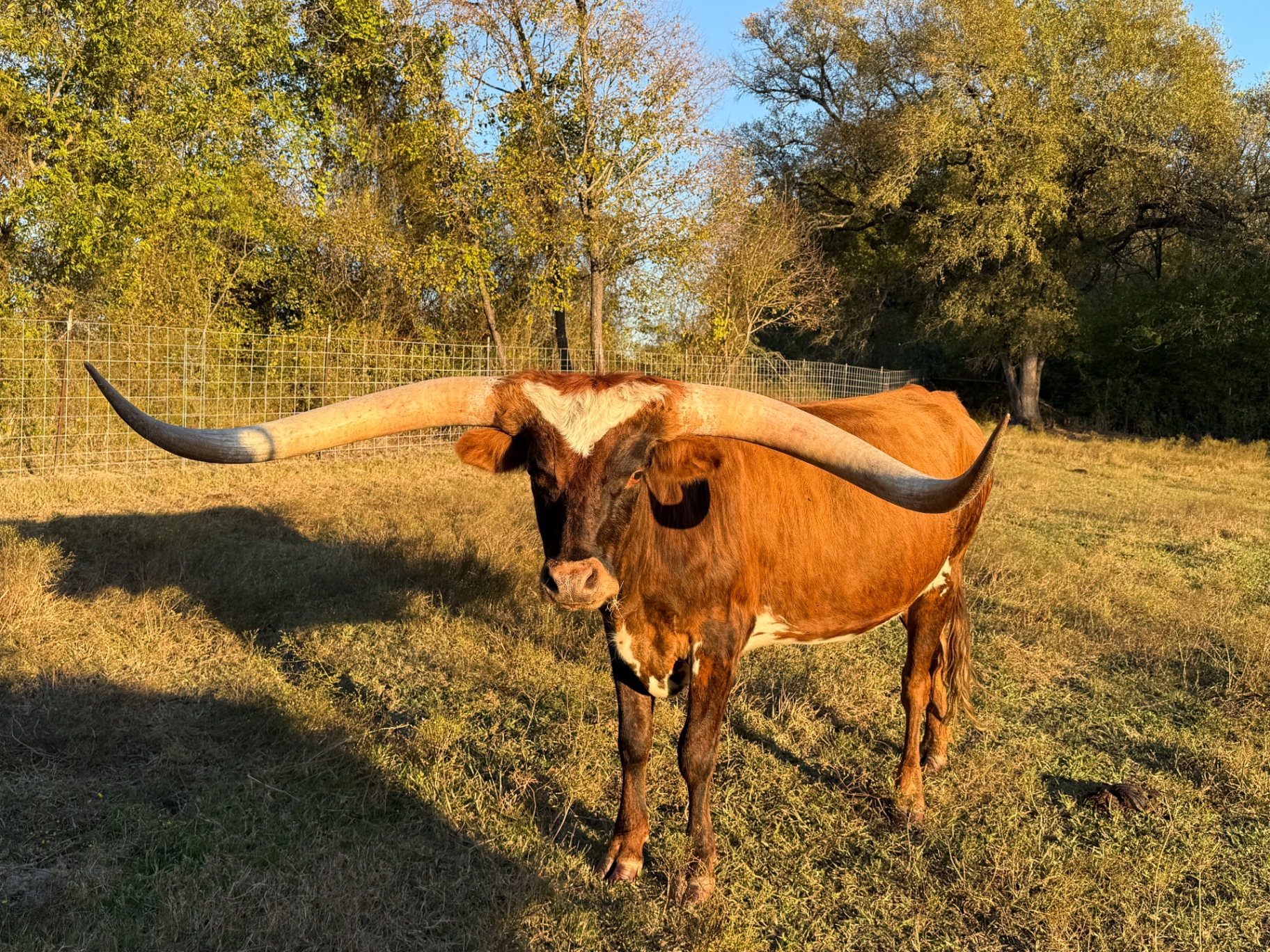
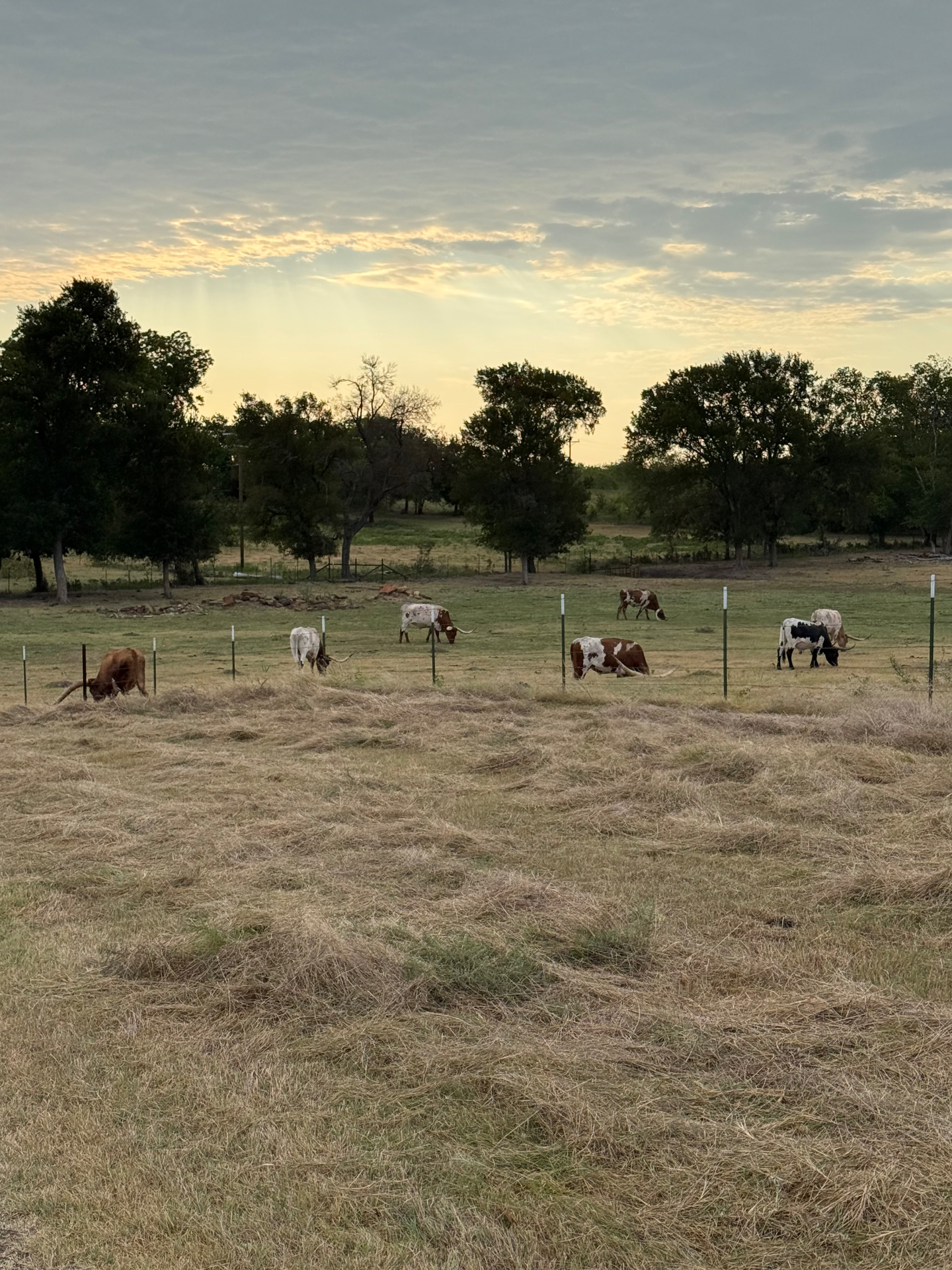
Longhorns were the very first livestock we bought when we bought our ranch. We picked them for a simple reason: they’re beautiful. Standing in a pasture, they don’t really look like anything else. We have seven now, all steers, ranging roughly from four to eight years old. We don’t breed Longhorns, so this isn’t a story about calving — it’s what we’ve learned from having these seven around every day.
Why Texas Longhorns
Honestly, we chose them because we thought they were beautiful. They were the first animals we brought home when we bought our ranch, and we didn’t have a long list of practical reasons beyond that.
What we didn’t expect is how much we would enjoy having them around. The longhorns turned out to be more than scenery — they became part of everyday life here.
What Care Actually Looks Like
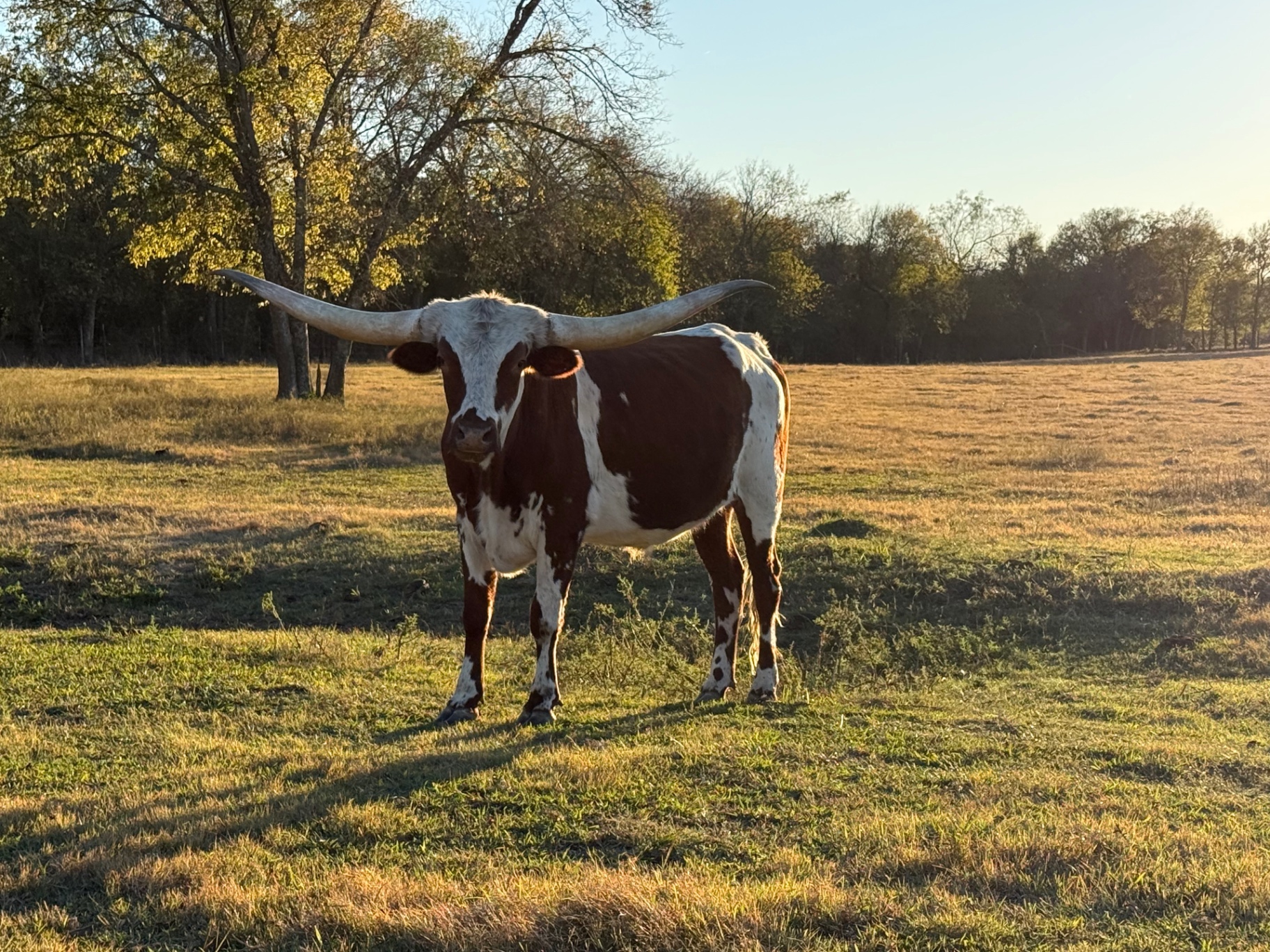
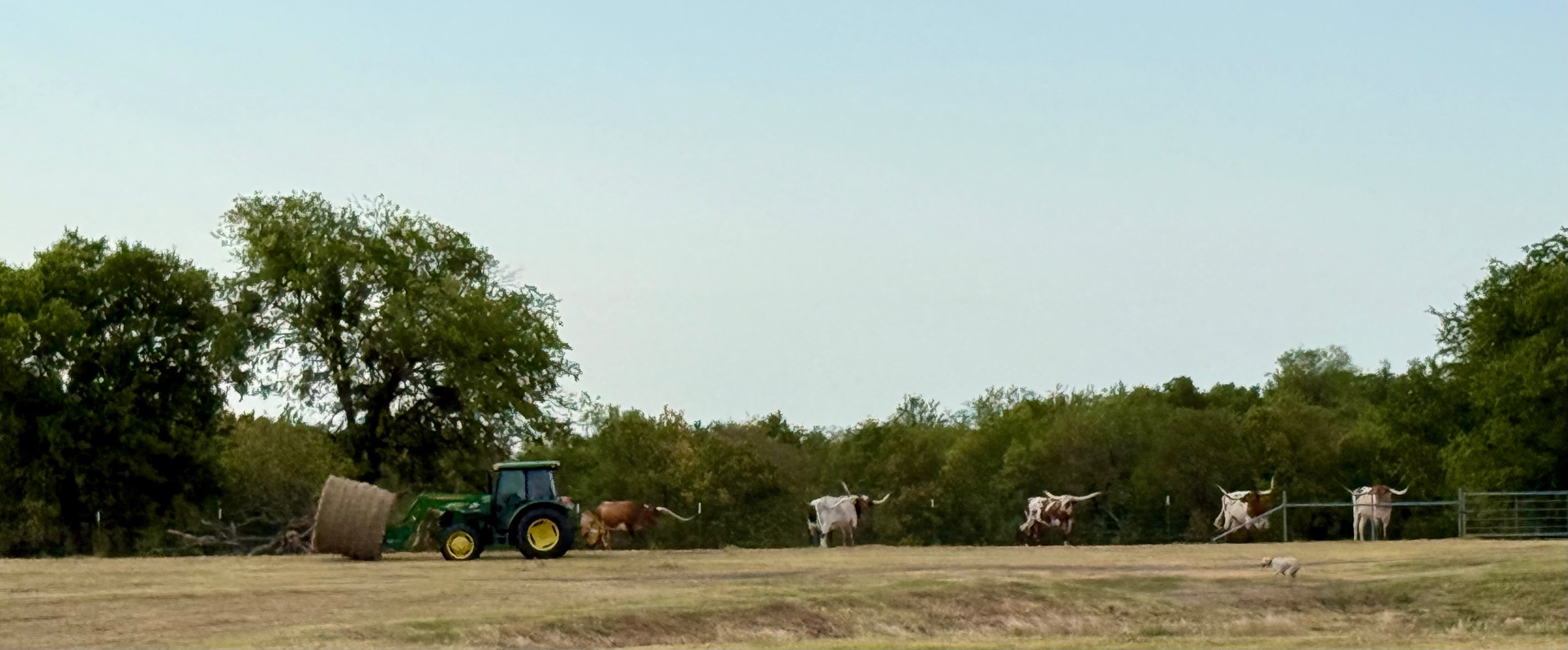
Most of the year, they graze. That’s the bulk of it. During dry periods and through the colder months we supplement with hay when they need it.
Their water comes from a large stock tank with a float that keeps the level where it should be, so we aren’t hauling water. Our normal check is simple: count all seven, look everyone over, and make sure the water system is doing its job.
North Texas can go from a good spring to a dry summer quickly, so we watch the pasture and plan hay before we actually need it.
About Those Horns
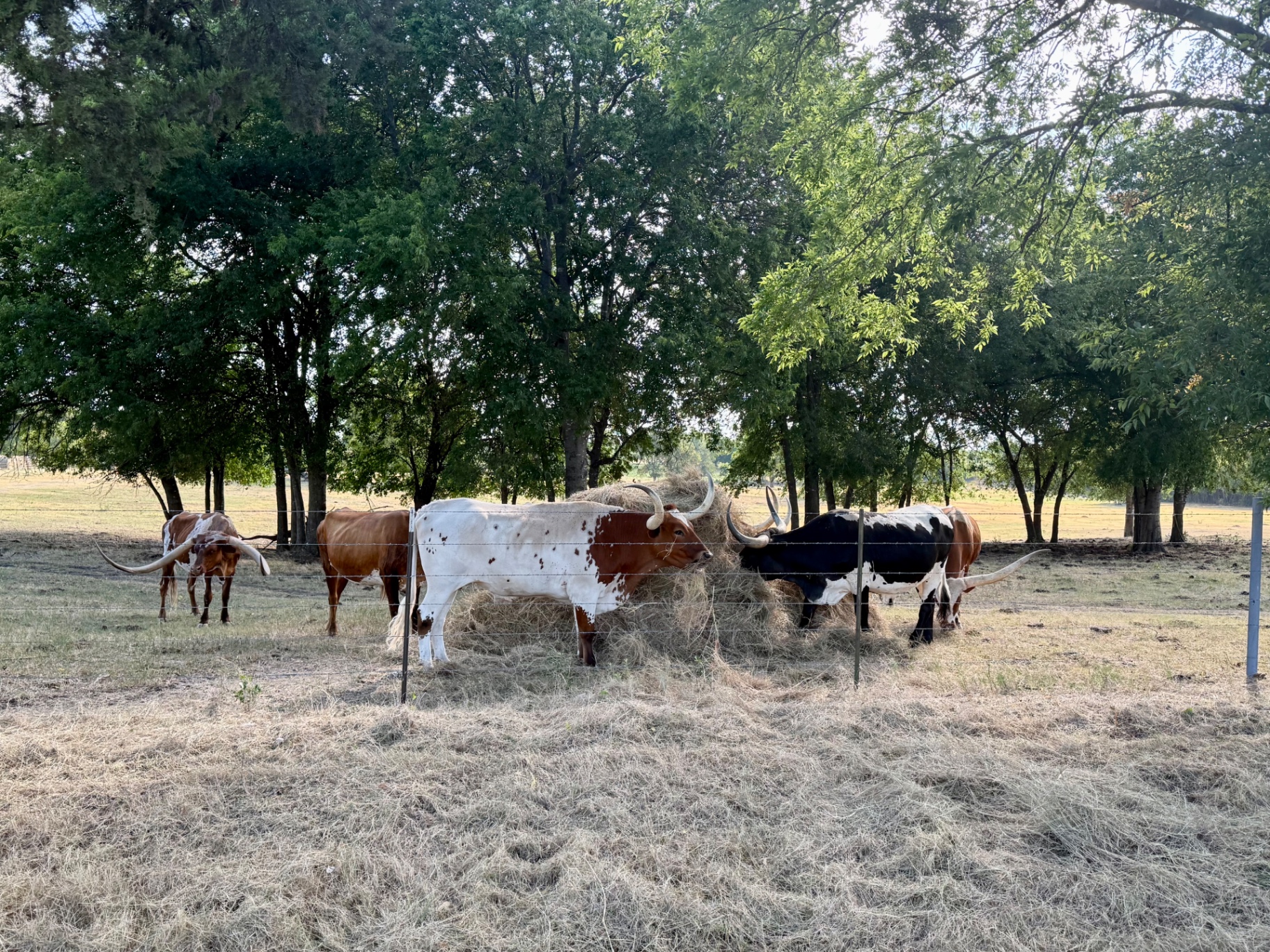
The horns are the first thing anyone notices, and they’re a good reminder that these are big animals. Ours are well-mannered, but their size and their horns still deserve respect, and we don’t forget that when we’re out in the pasture with them.
They’re also more aware of their horns than you’d guess. Watching them move through trees or turn around near a gate, they seem to know exactly how much room they take up.
Their Personalities
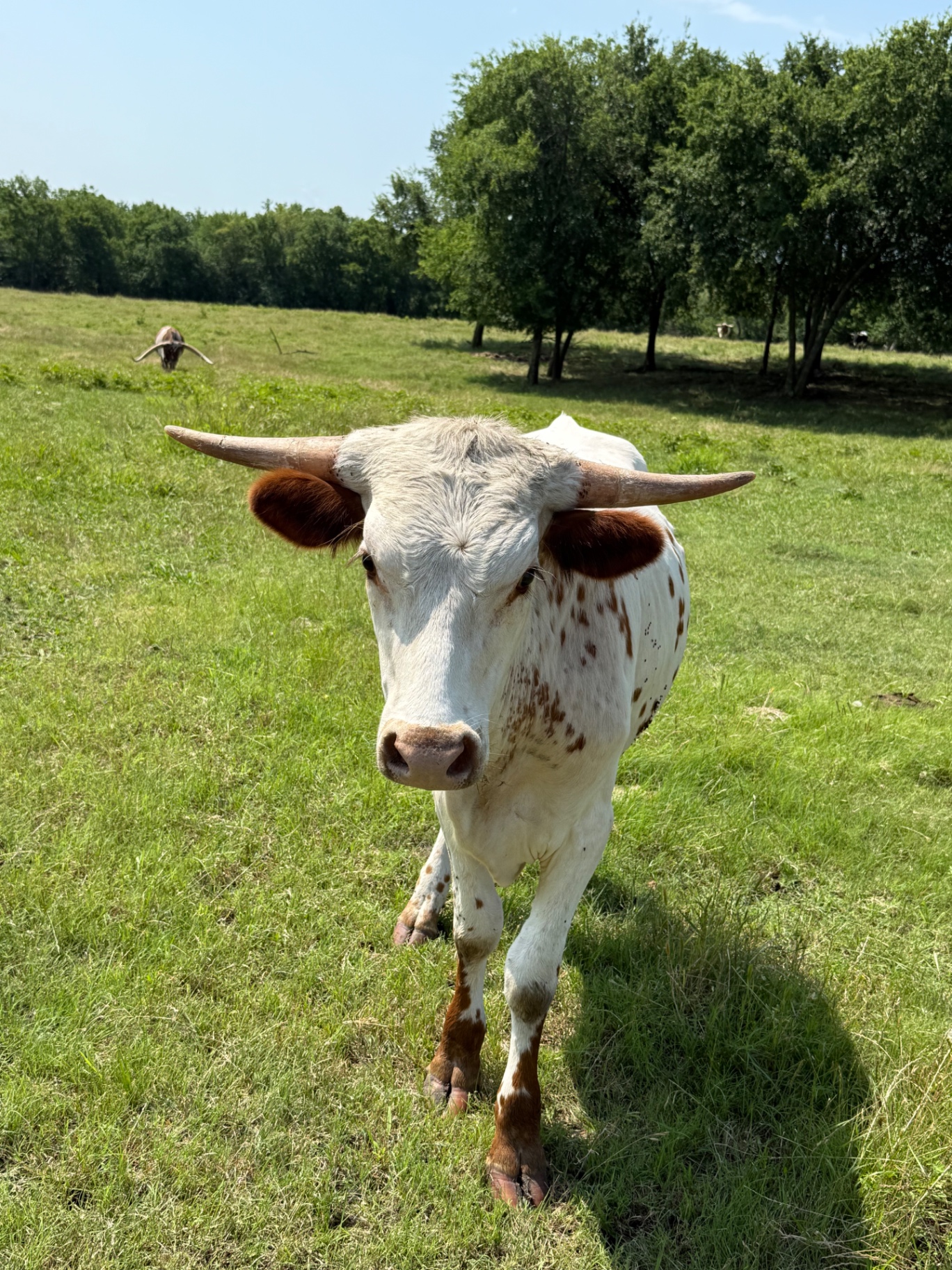
This is the part we didn’t see coming. Ours have turned into recognizable characters rather than just cattle in a field.
Most of them will let us scratch their heads. All of them know what cattle cubes are, and they’ll come to us for them. Fresh hay brings everyone over. And when the camera comes out, several of them will stand and look right at it like they’ve done it before.
That familiarity is what makes them feel like part of everyday life here instead of something out in the pasture we happen to own.
What We’d Tell Someone Starting
Have enough pasture for the animals you plan to keep. Make sure your water is dependable and your fencing is something you trust. Have a plan for supplemental hay when grazing isn’t enough, and spend enough time with your animals to learn what normal looks like for them.
Longhorns may be relatively low maintenance, but they are still large livestock and deserve attention and respect.
Part of the Landscape
These were the first animals we bought when we bought this place, and years later, seeing them scattered across the pasture has simply become part of what home looks like to us.
That’s the thing we like most about having them — they’re not just cattle we happen to own. They’re part of the landscape, and part of the rhythm of our days.
Practical favorites
What We Use
The handful of things our setup actually runs on:
- Large stock tank with an automatic float
- Hay for seasonal supplementation
- Cattle cubes
- Ranch fencing and gates