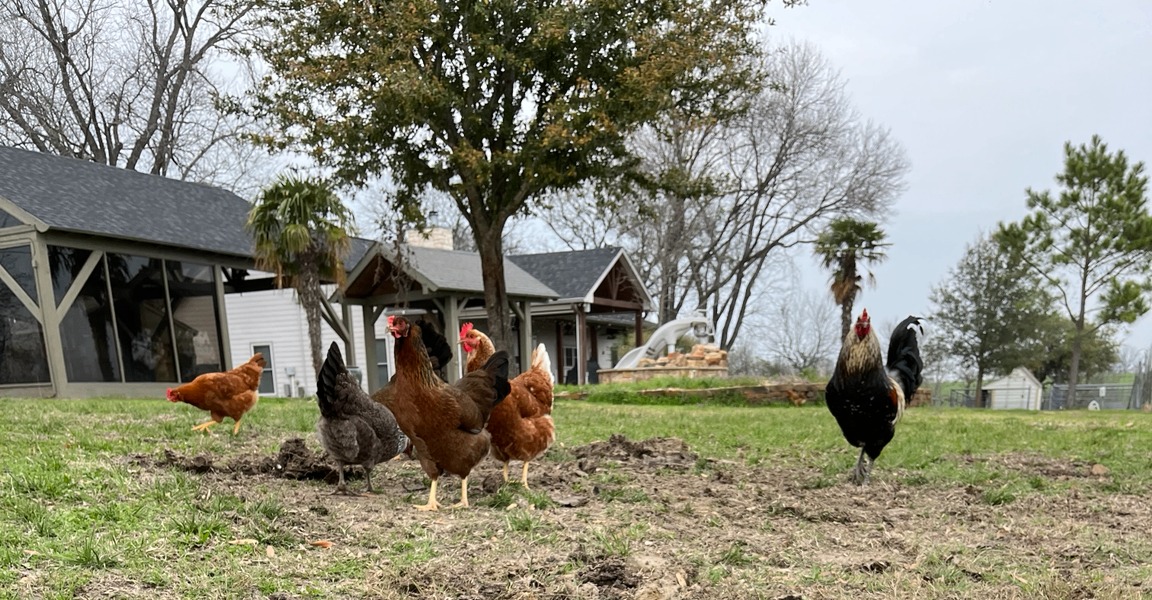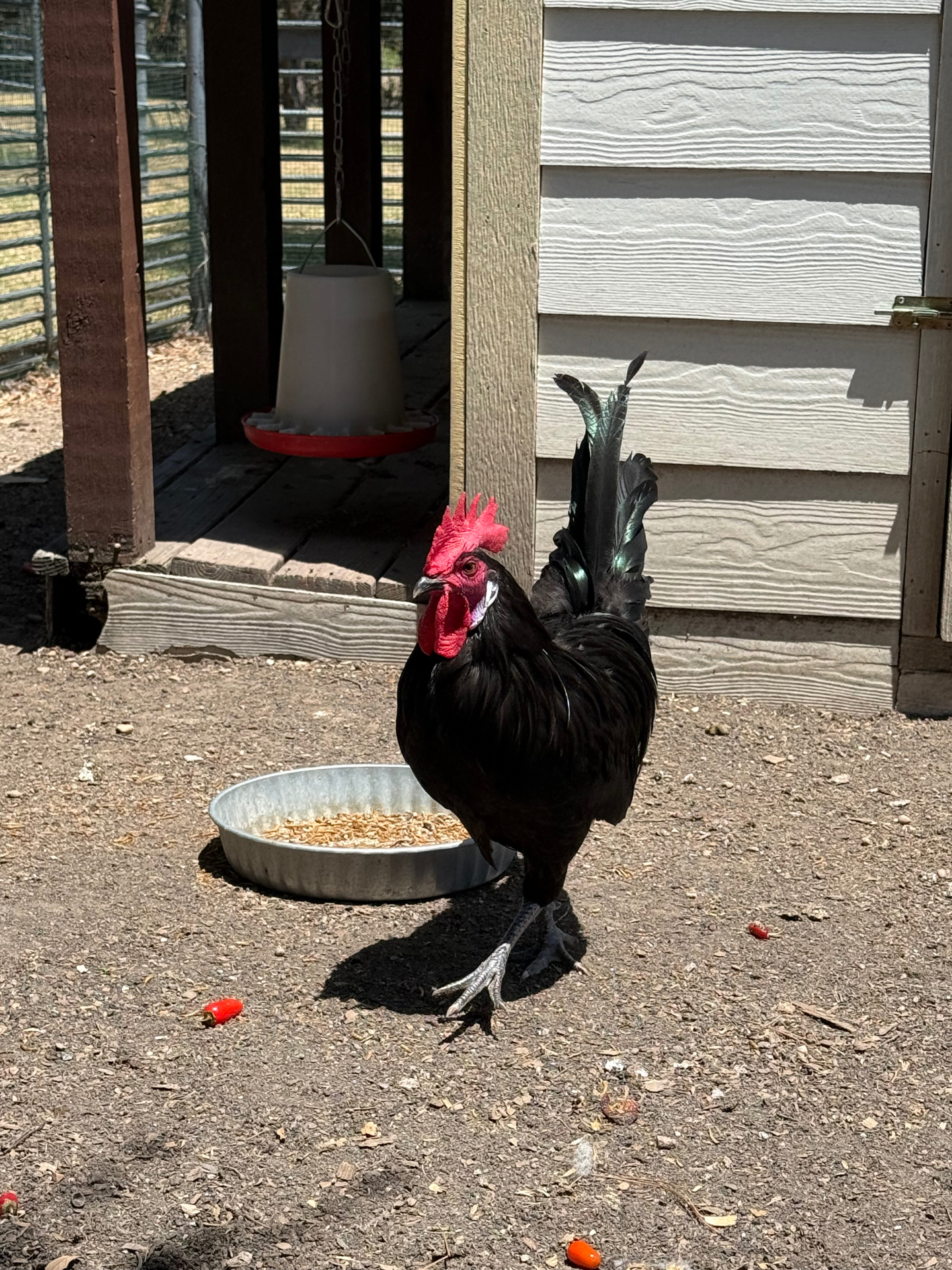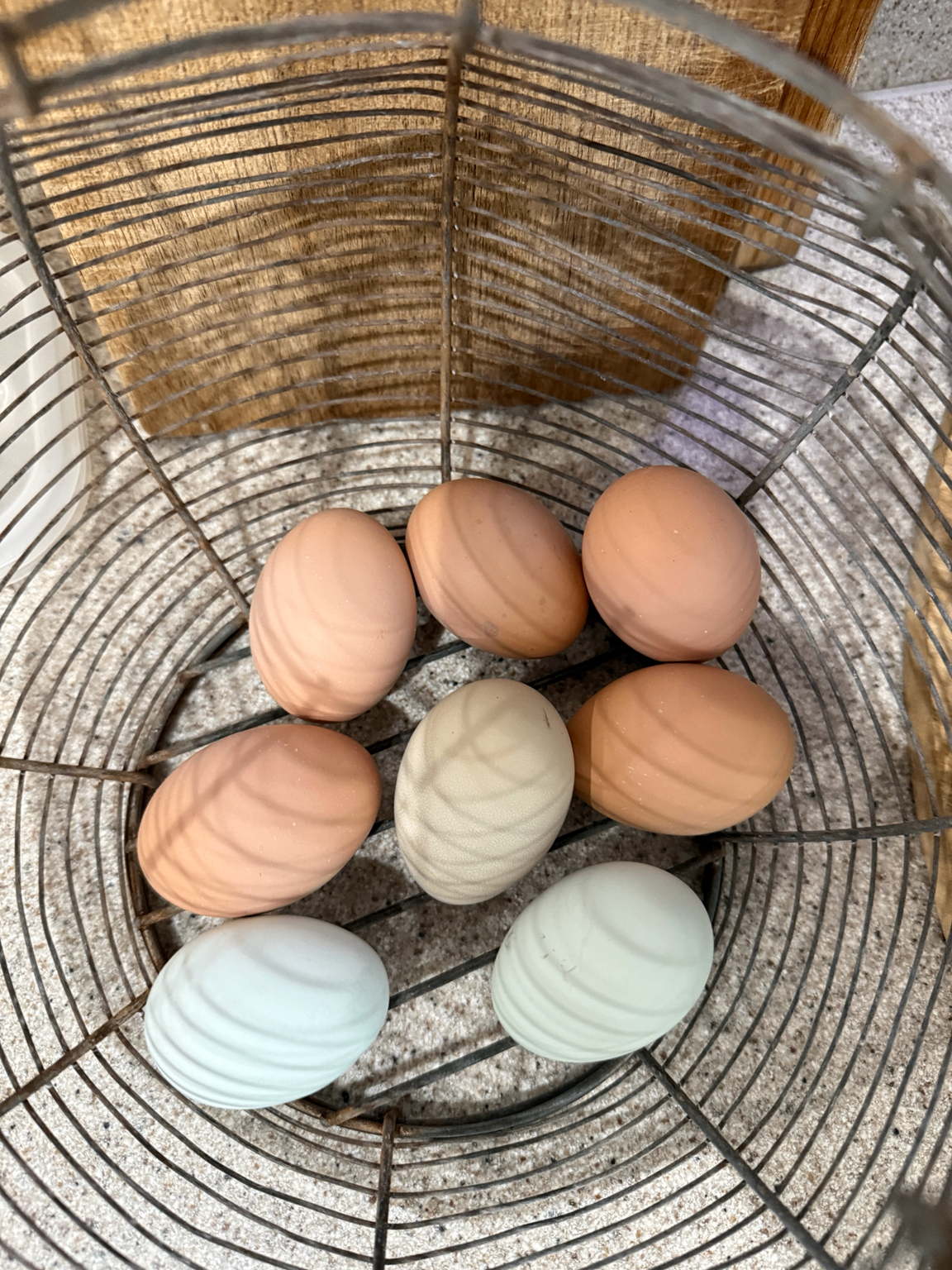
Chickens
Our Simple Chicken Coop & Setup
Our coop isn't fancy and it never has been. It's dry, it's shaded, and it latches — and after a few years of keeping chickens, those are still the three things we'd care about most. Here's what has actually mattered in our setup, what we've learned about keeping predators out, and what we'd build differently if we were starting over.
Our Setup (Practical, Not Fancy)
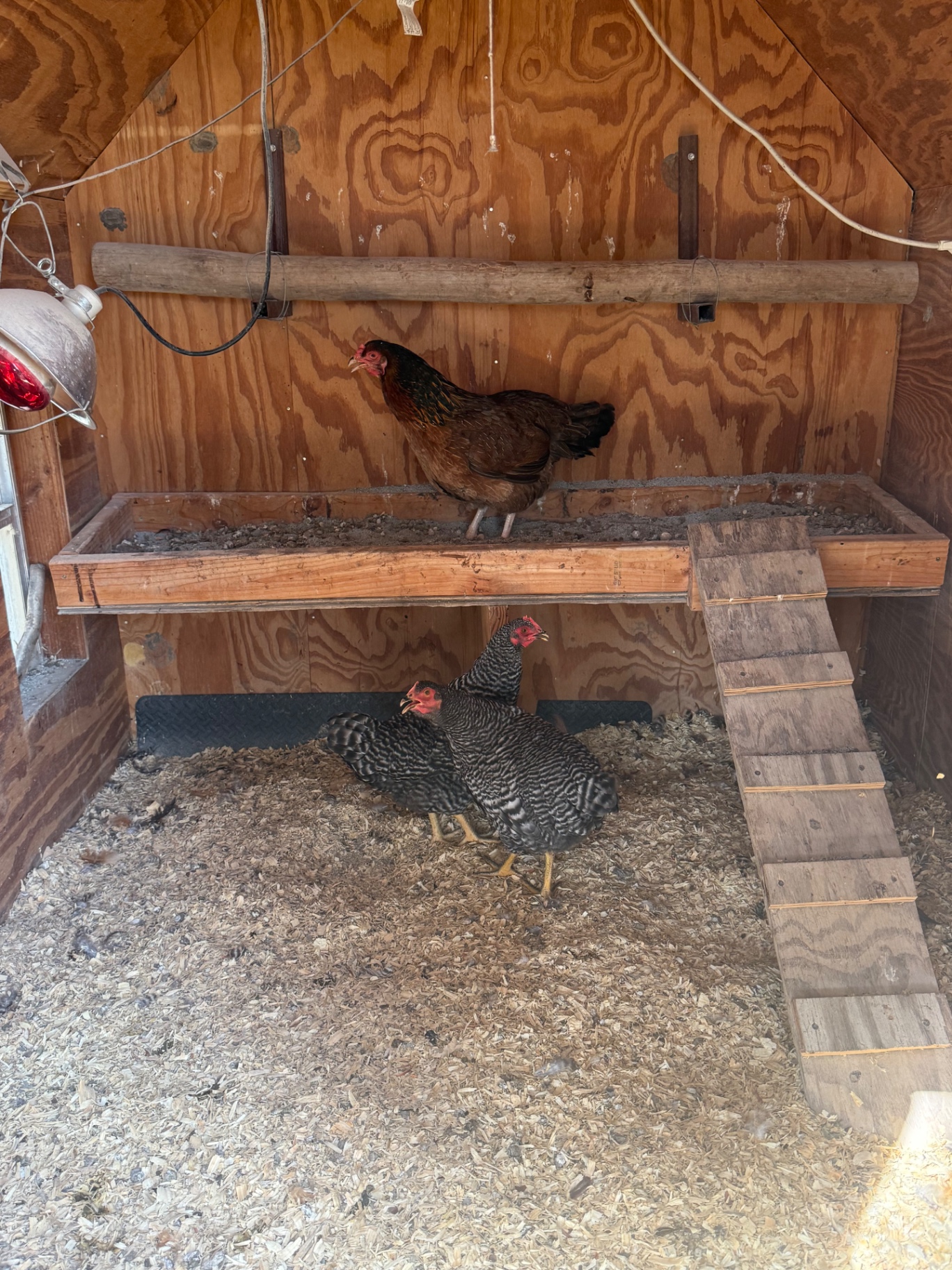
Our coop is plain plywood with a roost bar, a shelf the hens like to perch on, and a ramp up to the door. It isn't beautiful. It is dry, shaded, and it latches.
The things that have mattered most for us are the same whether a coop cost fifty dollars or fifteen hundred: a secure structure they can be shut into, a roosting bar off the ground, a quiet corner for nesting, real shade in the afternoon, airflow near the top so heat and moisture can escape, and protection from wind and rain.
There's no reason to copy our setup. Whether you have a backyard, a few acres, or more land, it helps to look at how the sun and wind move across your space and build around what your birds actually need rather than what photographs well.
Keeping the Coop Manageable
Chickens are messy. Accepting that early saves a lot of frustration. The goal isn't a spotless coop — it's one that stays dry and doesn't smell.
We use pine shavings for bedding. They absorb well and can be stirred and topped off in between cleanings. If we catch an ammonia smell, that's the signal: it's damp, or it's crowded, or airflow is poor. Fixing moisture solves most odor problems.
We don't clean on a set schedule. We clean when the coop needs it — fresh nesting material so eggs stay clean, a scrape of the roost area, and more bedding when things start looking tired. Keeping it dry and manageable matters more than keeping to a calendar.
When we pull out old bedding, we sometimes spread it through our chicken run. The chickens scratch through it, turn it over, and forage for bugs. That's simply part of what works with our setup.
Predators & Keeping Them Safe
This is the part to think through before the chickens arrive, not after. Almost every hard lesson people learn with a flock is a predator lesson, and the list where we are is long — coyotes, raccoons, possums, snakes, stray dogs, and hawks overhead.
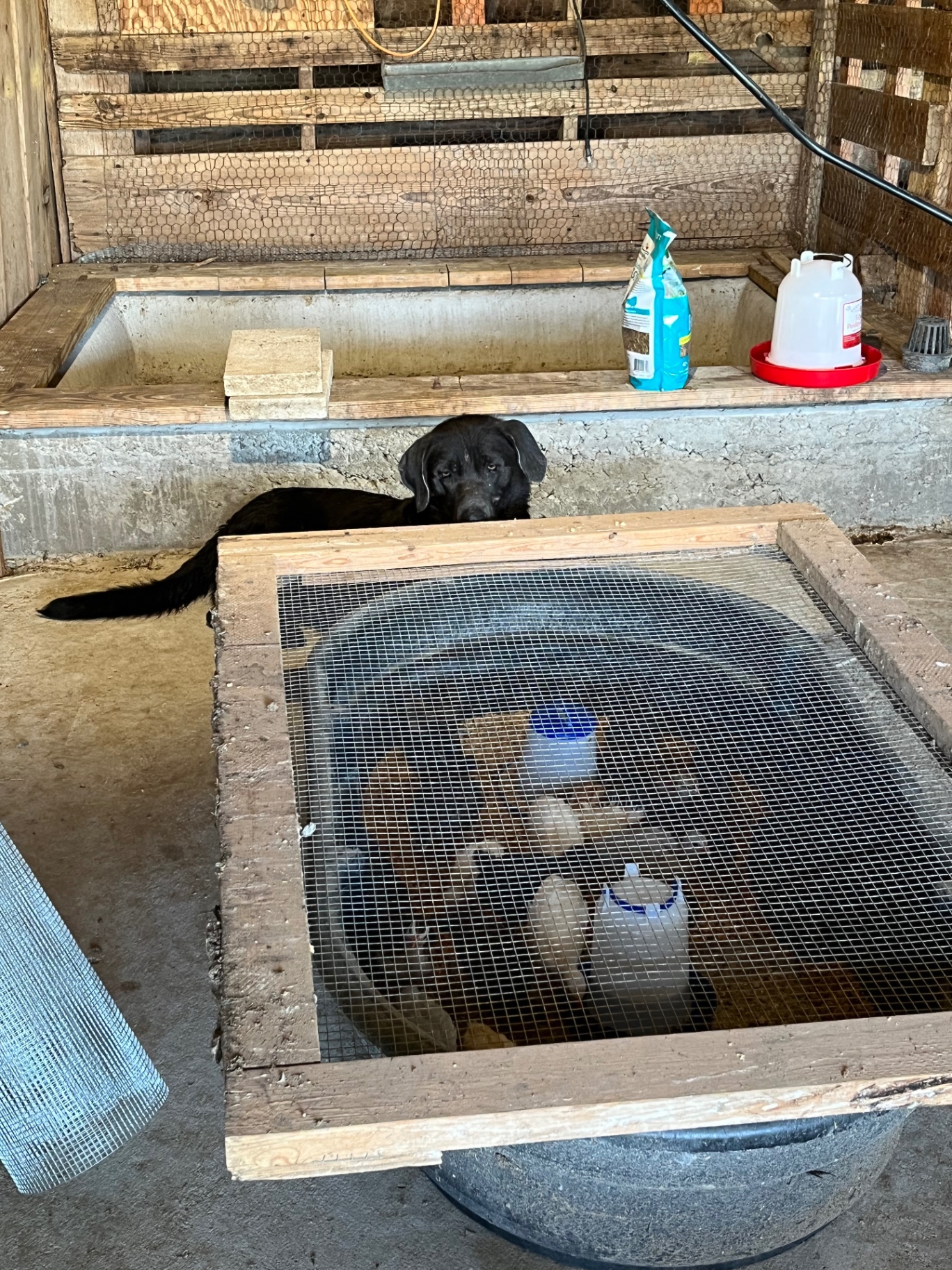
We've had rat snakes get baby chicks and eggs, and we've had hawks carry off chickens. Neither was dramatic; both taught us something. Snakes fit through smaller gaps than you'd guess, and a wide-open run is an easy target from above.
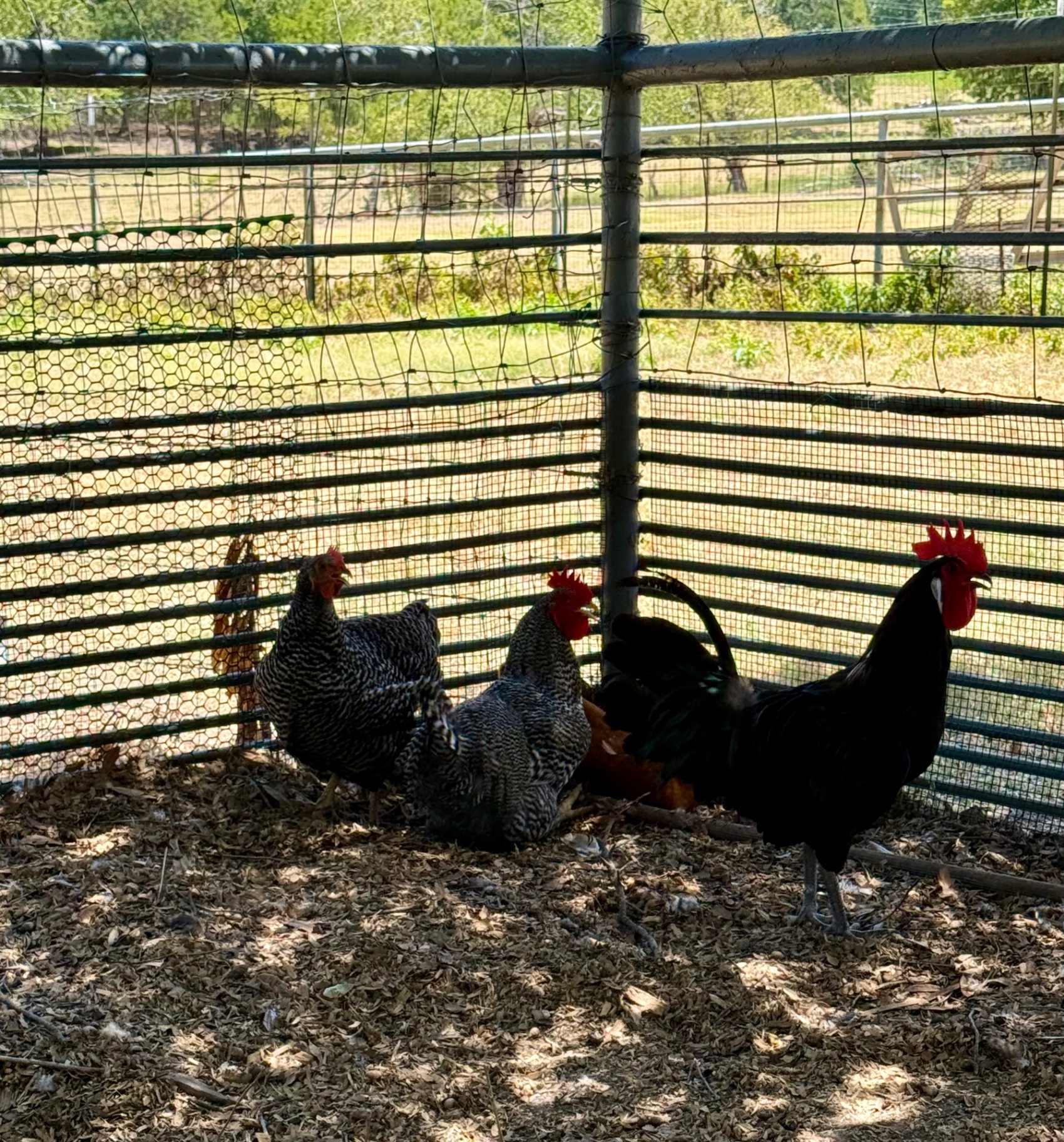
For us that has meant hardware cloth instead of chicken wire on any opening, small mesh low around the brooder and nesting areas, a run they can't be dug into or reached through, and a coop that gets closed up every single night. That last part is a habit more than a build: the night someone forgets is the night it matters.
We walk the perimeter now and then looking for gaps, loose latches, and holes worked slowly under the base. Overhead cover is worth thinking about too. What you actually need depends on where you live — your predators and your conditions decide how much protection is enough, and no single setup works everywhere.
Things We Would Do Differently
We'd finish the coop and run completely before bringing birds home. Doing it in a hurry with chickens already here is not the way.
We'd build bigger. More square footage than the minimum, more roost space, more room in the run — crowding causes most of the behavior problems people blame on breeds.
We'd make feed and water easier to reach, fill, and clean. Small daily friction adds up fast.
We'd plan shade from the start rather than adding it in a July panic, and we'd sort out predator protection before it was tested.
Practical favorites
What We Use
The simple things that keep our coop dry and secure:
- Pine shavings
- Hardware cloth and small-mesh wire
- Secure latches
- A covered brooder for chicks